Strategic Refinancing 2026: Lowering Credit Card Debt Interest
Anúncios
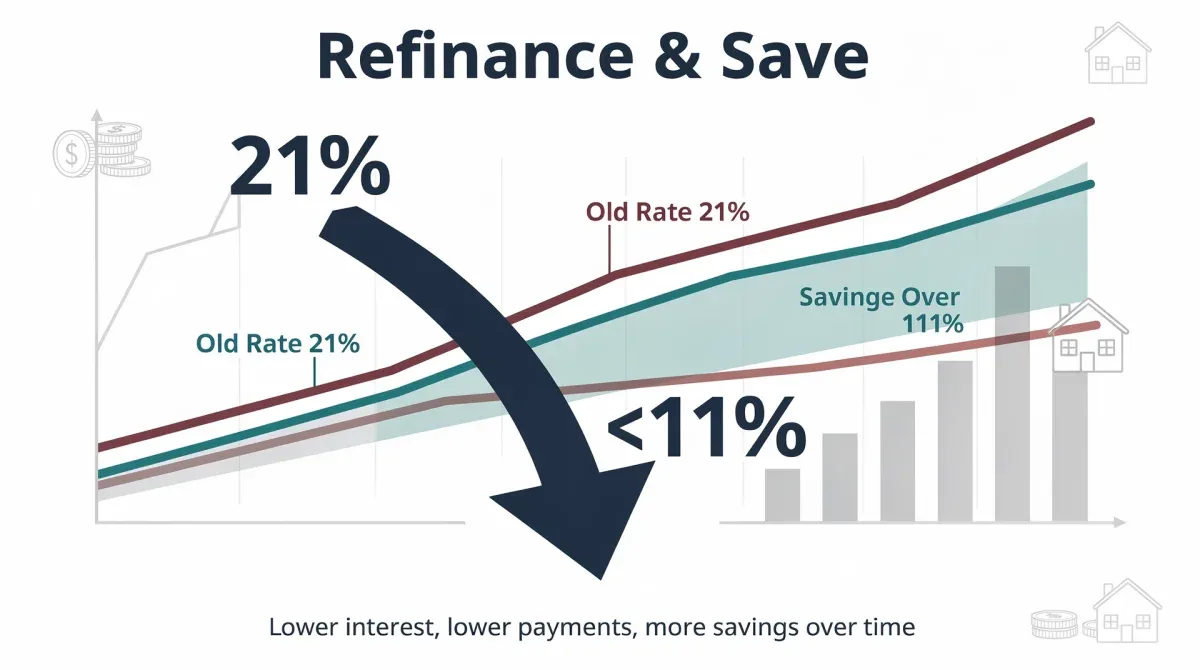
Are high credit card APRs trapping your monthly budget in a endless cycle of minimum payments? Executing Strategic Refinancing allows qualifying borrowers to replace predatory revolving card debt averaging 21% with structured, fixed-rate personal loans under 11%.
Consolidating high-interest credit card balances into a single, predictable monthly payment locks in a lower APR while setting a clear payoff timeline. Transitioning from variable credit card rates to fixed-rate loan terms protects your finances against interest rate fluctuations and accelerates principal reduction.
Slashing your effective interest rate in half can save thousands of dollars in cumulative finance charges while shortening your path to financial freedom. Here is how to leverage debt consolidation loans to lower your interest costs and optimize your payoff strategy.
The Current State of Credit Card Debt and Future Outlook
Credit card debt remains a pervasive challenge for millions of Americans, with average interest rates frequently hovering around 21% or even higher for those with less-than-perfect credit scores. This elevated cost of borrowing can severely impede financial progress, making it difficult to save, invest, or achieve other financial goals.
As we look towards 2026, economic forecasts suggest a continued, albeit slow, stabilization in interest rates, which could create a more favorable environment for borrowers seeking to refinance. Understanding these trends is crucial for timely decision-making regarding personal loan applications and debt consolidation strategies.
Anúncios
The cumulative effect of high interest payments means that a significant portion of monthly credit card payments goes towards interest rather than principal reduction. This reality underscores the urgent need for effective strategies like Strategic Refinancing in 2026 to alleviate financial strain.
Why High Credit Card Interest Rates Persist
Credit risk assessment by lenders often assigns higher rates to consumers with lower credit scores.
Variable interest rates on credit cards can fluctuate with market conditions, often increasing over time.
Revolving credit lines inherently carry higher interest due to their unsecured nature and flexibility.
The persistence of high credit card interest rates is a complex issue, influenced by individual creditworthiness, prevailing economic conditions, and the inherent risk profile associated with unsecured debt. Lenders factor in various elements, including payment history, credit utilization, and debt-to-income ratios, when determining interest rates.
Moreover, the convenience and accessibility of credit cards can sometimes lead to accumulating balances that become difficult to manage, especially when coupled with compounding interest. This creates a challenging cycle for many, highlighting the importance of proactive debt management.
Anúncios
For those struggling with rates at 21% or more, exploring alternatives like fixed-rate personal loans becomes not just an option, but a necessity. These loans offer a predictable payment schedule and often a significantly lower interest rate, providing a clear path to debt freedom.
Understanding Fixed-Rate Personal Loans for Debt Consolidation
Fixed-rate personal loans offer a powerful tool for debt consolidation, providing a predictable payment structure and a stable interest rate throughout the loan term. Unlike variable-rate credit cards, the monthly payment for a fixed-rate loan remains constant, simplifying budgeting and financial planning.
This stability is a key advantage for individuals seeking to escape the volatility of high-interest credit card debt. By consolidating multiple credit card balances into a single personal loan, borrowers can often secure a much lower overall interest rate, directly contributing to substantial savings over time.
The process involves obtaining a new loan to pay off existing, higher-interest debts, effectively replacing several payments with one, more manageable obligation. This strategic move is central to the concept of Strategic Refinancing in 2026.
Benefits of Fixed-Rate Personal Loans
Predictable Payments: Consistent monthly payments make budgeting easier and eliminate surprises.
Lower Interest Rates: Often significantly lower than credit card rates, leading to substantial savings.
Defined Payoff Date: A clear end date for debt provides motivation and financial clarity.
The appeal of fixed-rate personal loans lies in their ability to offer a clear path to debt resolution. By locking in a lower interest rate, borrowers can allocate more of their monthly payment towards the principal, accelerating the debt payoff process.
This method not only reduces the total amount of interest paid but also streamlines financial management by consolidating multiple debts into a single, straightforward payment. The psychological benefit of seeing a clear end to debt should not be underestimated.
For those targeting a reduction from 21% to under 11%, fixed-rate personal loans are often the most direct and effective vehicle. Lenders evaluate various factors, including credit score, income, and debt-to-income ratio, to determine eligibility and loan terms.
Strategic Refinancing in 2026: Key Steps and Considerations
Embarking on Strategic Refinancing in 2026 requires careful planning and execution. The first step involves a thorough assessment of your current financial situation, including all outstanding credit card balances, interest rates, and minimum payments.
Next, researching potential lenders and comparing personal loan offers is crucial. Different lenders have varying eligibility requirements, interest rates, and loan terms, so it is essential to shop around to find the most favorable option for your specific needs and credit profile.
Finally, understanding the application process and preparing all necessary documentation will ensure a smooth and efficient refinancing experience. This proactive approach maximizes the chances of securing a loan with the desired interest rate reduction.
Preparing Your Financial Profile
Credit Score Improvement: Focus on making all payments on time and reducing credit utilization.
Debt-to-Income Ratio: Work to lower this ratio by paying down existing debts or increasing income.
Gather Documentation: Prepare income verification, employment details, and debt statements.
Improving your credit score before applying for a personal loan can significantly impact the interest rate you are offered. Lenders typically reserve the lowest rates for borrowers with excellent credit histories, making it a worthwhile endeavor to enhance your financial standing.
Additionally, a lower debt-to-income ratio signals to lenders that you have the capacity to take on new debt without overextending your finances. This metric is a critical component of a lender's risk assessment and can influence loan approval and terms.
Being organized with your financial documents, such as pay stubs, bank statements, and credit card statements, will streamline the application process. This preparedness demonstrates responsibility and can expedite the lender's decision-making.
Navigating Lender Options and Application Processes
The market for personal loans is diverse, encompassing traditional banks, credit unions, and online lenders, each offering unique benefits and drawbacks. Traditional banks often provide a personalized experience with in-person support, which can be beneficial for complex financial situations.
Credit unions, known for their member-centric approach, frequently offer competitive rates and more flexible terms to their members, making them an attractive option for many borrowers. Online lenders, on the other hand, typically boast streamlined application processes and rapid funding, appealing to those seeking quick solutions.
Comparing these options thoroughly is essential to finding the best fit for your Strategic Refinancing in 2026 goals. Each type of lender caters to different borrower profiles and needs, so understanding their strengths is key.
Key Considerations for Lender Selection
Interest Rates and Fees: Compare APRs, origination fees, and any prepayment penalties across lenders.
Loan Terms: Evaluate repayment periods to ensure monthly payments are affordable and align with your financial plan.
Customer Service: Read reviews and assess the quality of support offered by different financial institutions.
When comparing interest rates, it is crucial to look at the Annual Percentage Rate (APR), which includes both the interest rate and any associated fees. This provides a more comprehensive view of the true cost of borrowing and allows for accurate comparisons between loan offers.
Understanding the loan terms, particularly the repayment period, is vital for ensuring that the monthly payments are manageable within your budget. While longer terms might mean lower monthly payments, they can also result in paying more interest over the life of the loan.
The application process itself typically involves submitting personal and financial information, often accompanied by a credit check. Being prepared with all necessary documents can significantly reduce the time from application to approval, allowing you to quickly move forward with Strategic Refinancing in 2026.
Achieving the Target: Under 11% Interest Rates
Achieving an interest rate of under 11% on a personal loan for debt consolidation is an attainable goal for many, especially those with good to excellent credit scores. This significant reduction from typical credit card rates of 21% or higher can translate into thousands of dollars in savings over the life of the loan.
The primary factor influencing the interest rate offered is your creditworthiness, which includes your credit score, credit history, and debt-to-income ratio. Lenders use these metrics to assess the risk associated with lending to you and adjust interest rates accordingly.
Therefore, focusing on improving your credit profile before applying is a critical step in securing the most favorable terms for Strategic Refinancing in 2026.
Even if your credit score is not perfect, there are still options available, though the interest rate might be slightly higher. Some lenders specialize in loans for individuals with fair credit, offering a stepping stone towards better financial health.
The key is to explore all available avenues and understand the trade-offs. A rate of 11% might still be a substantial improvement over 21%, even if it is not the absolute lowest rate on the market.
Furthermore, some lenders offer pre-qualification processes that allow you to check your potential rates without impacting your credit score. This provides a valuable opportunity to gauge your eligibility and compare offers before committing to a formal application for Strategic Refinancing in 2026.
Post-Refinancing: Managing Your New Financial Landscape
Once you have successfully executed Strategic Refinancing in 2026, the journey towards financial freedom does not end; rather, it transitions into a new phase of responsible debt management. Establishing a disciplined approach to your new personal loan payments is paramount.
This involves consistently making on-time payments and adhering to your budget to avoid accumulating new high-interest debt. The goal is to break the cycle of revolving credit and leverage the lower interest rate to accelerate your debt payoff and build a stronger financial foundation.
It is also an opportune time to reassess your spending habits and identify areas where you can further optimize your budget. This proactive management ensures that the benefits of refinancing are fully realized and sustained over the long term.
Maintaining Financial Discipline
Automate Payments: Set up automatic transfers to ensure on-time payments and avoid late fees.
Avoid New Credit Card Debt: Resist the temptation to use freed-up credit lines for new purchases.
Budget Review: Regularly review and adjust your budget to align with your financial goals.
Automating your personal loan payments is a simple yet effective strategy to prevent missed due dates and potential late fees, which can negatively impact your credit score. This also removes the mental burden of remembering payment deadlines.
A critical aspect of post-refinancing management is to avoid accumulating new credit card debt. The lower monthly payments from your consolidated loan can free up cash flow, but it is essential to channel these savings towards building an emergency fund or other financial goals, rather than incurring new high-interest balances.
Regularly reviewing your budget will help you stay on track and adapt to any changes in your income or expenses. This ongoing vigilance is crucial for maintaining the financial stability achieved through Strategic Refinancing in 2026.
The Long-Term Impact of Lowering Interest Rates
The long-term impact of successfully implementing Strategic Refinancing in 2026 extends far beyond immediate savings. By significantly reducing the interest paid on debt, individuals can free up substantial funds that can be redirected towards building wealth.
This includes accelerating savings for retirement, making down payments on major purchases, or investing in personal development. The financial flexibility gained can be a catalyst for achieving long-held financial aspirations and improving overall quality of life.
Moreover, a reduced debt burden often leads to improved credit scores, opening doors to even more favorable financial products in the future. This positive feedback loop reinforces responsible financial behavior and creates a stronger financial outlook.
Building Financial Resilience
Increased Savings Capacity: More disposable income can be allocated to savings and investments.
Improved Credit Score: Consistent on-time payments build a stronger credit history.
Reduced Financial Stress: Lower payments and a clear debt payoff plan alleviate mental burden.
With less money going towards high-interest payments, your capacity to save for emergencies, future goals, and investments dramatically increases. This shift from debt servicing to wealth building is a cornerstone of long-term financial resilience.
A stronger credit score, a direct result of consistent and responsible debt management post-refinancing, can unlock better terms on future loans, mortgages, and even insurance premiums. This creates a virtuous cycle of financial advantage.

The psychological benefits of reduced financial stress cannot be overstated. Knowing you are on a clear path to debt freedom, with manageable fixed payments, provides peace of mind and allows you to focus on other aspects of your life without the constant shadow of high-interest debt.
Expert Insights and Market Predictions for 2026
Financial experts widely anticipate that 2026 will present a dynamic environment for personal finance, with continued opportunities for strategic debt management. Analysts suggest that while overall interest rates may remain elevated compared to historical lows, the competitive landscape among lenders will likely favor consumers seeking fixed-rate personal loans.
This competitive pressure could drive down rates for qualified borrowers, making the goal of lowering credit card interest from 21% to under 11% more accessible. Industry insiders recommend closely monitoring economic indicators and lender offerings throughout the year.
Therefore, staying informed about market trends and expert predictions is crucial for maximizing the benefits of Strategic Refinancing in 2026.
What Financial Experts Advise
Proactive Credit Management: Continuously monitor and improve your credit score.
Shop Around Aggressively: Compare offers from multiple lenders to secure the best rates.
Consider Professional Advice: Consult with a financial advisor for personalized strategies.
Experts emphasize the importance of a proactive approach to credit management. Regularly checking your credit report for errors and taking steps to improve your score can significantly enhance your borrowing power and secure lower interest rates.
The advice to shop around aggressively cannot be overstated. The difference of even a few percentage points on a personal loan can translate into substantial savings over the loan term, making it worthwhile to compare multiple offers.
For complex financial situations, consulting with a certified financial advisor can provide invaluable personalized guidance. They can help navigate the intricacies of Strategic Refinancing in 2026 and ensure your strategy aligns with your broader financial goals.
Key Point | Brief Description |
|---|---|
Credit Card Debt | High interest rates (around 21%) burdening many consumers. |
Personal Loans | Fixed-rate loans offer lower, stable interest rates for consolidation. |
Refinancing Strategy | Consolidate debt to achieve interest rates under 11% by 2026. |
Financial Benefits | Significant interest savings, predictable payments, improved credit. |
Frequently Asked Questions About Strategic Refinancing in 2026
What is Strategic Refinancing in 2026 and why is it important?▼
Strategic Refinancing in 2026 refers to the deliberate action of consolidating high-interest credit card debt, typically around 21%, into lower-interest fixed-rate personal loans, aiming for rates under 11%. This is crucial for reducing financial burden, simplifying payments, and accelerating debt payoff, leading to better financial health.
How can a fixed-rate personal loan help lower credit card interest?▼
Fixed-rate personal loans offer a stable interest rate and consistent monthly payments, unlike variable credit card rates. By using a personal loan to pay off multiple credit cards, you consolidate debt into a single, often much lower, interest rate, saving money and providing a clear path to debt freedom.
What credit score is needed to achieve an interest rate under 11%?▼
While specific requirements vary by lender, generally a good to excellent credit score (typically 670 and above) significantly increases your chances of securing a personal loan with an interest rate under 11%. A strong credit history and low debt-to-income ratio are also key factors in obtaining the most favorable terms.
What steps should I take before applying for a personal loan in 2026?▼
Before applying, assess your current debt, improve your credit score by making on-time payments, and reduce your credit utilization. Gather all necessary financial documents, such as income verification and debt statements. Research and compare offers from various lenders to find the best rates and terms for your situation.
What are the long-term benefits of Strategic Refinancing in 2026?▼
Beyond immediate interest savings, long-term benefits include improved financial stability, a higher credit score due to responsible payment history, and increased capacity for savings and investments. It reduces financial stress, allowing you to focus on achieving broader financial goals and building lasting wealth.
Looking Ahead
The current financial climate, coupled with anticipated market conditions in 2026, presents a timely opportunity for individuals to take control of their credit card debt. Strategic Refinancing in 2026 is not merely a short-term fix but a pivotal step towards long-term financial health.
By understanding the available tools and acting decisively, consumers can significantly reduce their financial burdens and pave the way for a more secure financial future. It is imperative to stay informed and proactive in this evolving financial landscape.