Maximize 2026 Medicare Part D $2,000 Cap: Drug Savings Guide
Anúncios
If you rely on prescription medications, managing monthly pharmacy costs can quickly take a toll on your wallet. Fortunately, recent updates to federal drug coverage are making it much easier to keep your healthcare expenses predictable and manageable.
Understanding how Medicare Part D protects your savings is essential for getting the most out of your prescription benefits. Under updated federal rules, once you reach your annual out-of-pocket spending limit, your insurance plan covers 100% of your covered prescription costs for the rest of the year.
(Note: While initial reports cited a $2,000 baseline cap, the official CMS out-of-pocket maximum is adjusted to $2,100). Knowing how this spending limit works—and how to spread payments over time—helps you lock in maximum savings every time you refill a prescription.
Understanding the 2026 Medicare Part D Out-of-Pocket Cap
The Inflation Reduction Act of 2022 introduced significant reforms to Medicare Part D, with the $2,000 out-of-pocket (OOP) cap being one of the most impactful changes.
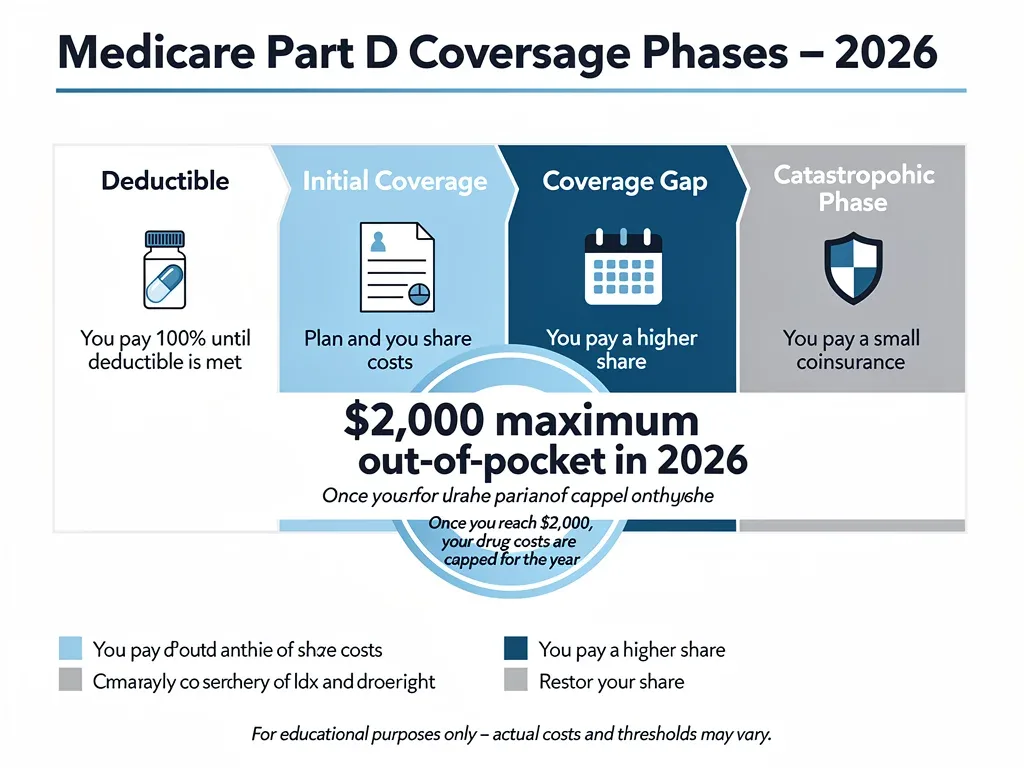
This cap, effective January 1, 2026, means that once a beneficiary's out-of-pocket spending on covered prescription drugs reaches $2,000 in a calendar year, they will not pay anything further for their Part D drugs for the remainder of that year.
Anúncios
This reform is designed to protect beneficiaries from catastrophic drug costs, a concern that has long plagued many, particularly those with chronic conditions requiring expensive medications. Prior to this, there was no true cap on out-of-pocket spending, only a transition into a catastrophic phase where beneficiaries still paid 5% of drug costs.
The move to a hard $2,000 limit represents a substantial shift, offering predictability and significant financial relief. It is essential for beneficiaries to grasp what counts towards this cap to begin Maximizing the 2026 Medicare Part D effectively.
What Counts Towards Your $2,000 Out-of-Pocket Cap
Understanding what expenditures contribute to the $2,000 out-of-pocket cap is fundamental for strategic planning. Generally, your out-of-pocket costs include your deductible, your copayments, and your coinsurance payments for covered prescription drugs. These are the amounts you pay directly to the pharmacy or your plan.
Anúncios
It is important to note that monthly premiums for your Part D plan do not count towards this out-of-pocket maximum. Additionally, payments for drugs not covered by your plan or those purchased outside of your plan's formulary will also not count towards the cap. Only costs for formulary drugs apply.
Beneficiaries should regularly review their Explanation of Benefits (EOB) statements from their Part D plan to track their progress towards the cap. This proactive monitoring is a key step in Maximizing the 2026 Medicare Part D.
Tracking Your Spending
Review EOBs: Regularly check statements from your Part D plan for accurate spending totals.
Use online portals: Many plans offer online accounts to track drug costs and progress towards the cap.
Keep pharmacy receipts: Maintain records of all prescription drug purchases as a backup.
Accurate tracking helps you anticipate when you will reach the cap and allows you to adjust your spending or medication schedule if possible. Being informed about your accumulated costs empowers you to make timely decisions.
Step-by-Step Guide to Maximizing Your Savings
Maximizing the 2026 Medicare Part D involves a proactive approach to your prescription drug coverage. The first step is to thoroughly review your current Medicare Part D plan and its formulary. Ensure that all your necessary medications are covered and understand their tier placement, as this directly affects your copayments.
Secondly, compare plans annually during the Open Enrollment Period, typically from October 15 to December 7. Plans change their formularies, premiums, deductibles, and cost-sharing structures every year. Utilizing the Medicare Plan Finder tool on Medicare.gov can help you identify the most cost-effective plan for your specific drug regimen.
Finally, explore all available financial assistance programs. Many states offer State Pharmaceutical Assistance Programs (SPAPs), and there are also federal programs like Extra Help (Low-Income Subsidy) that can significantly reduce your out-of-pocket costs and help you reach the cap faster. These programs are vital for truly Maximizing the 2026 Medicare Part D.
Annual Plan Comparison
Utilize Medicare Plan Finder: Input your medications and preferred pharmacy to compare plans.
Check formulary changes: Ensure your drugs remain covered and at favorable tiers.
Evaluate premium vs. out-of-pocket: Balance lower premiums with potential higher cost-sharing.
A comprehensive annual review ensures your plan continues to meet your needs and offers the best value. This diligent approach is paramount to long-term prescription drug savings.
Leveraging Generics and Preferred Pharmacies
One of the most immediate and effective strategies for Maximizing the 2026 Medicare Part D is to prioritize generic medications whenever possible. Generic drugs are chemically identical to their brand-name counterparts, but typically cost significantly less. Your doctor can often prescribe a generic alternative, which will reduce your copayments and accelerate your path to the $2000 cap.
Additionally, paying attention to your plan's preferred pharmacy network can lead to substantial savings. Many Part D plans have agreements with specific pharmacies that offer lower copayments for covered drugs. Using an out-of-network pharmacy can result in higher costs or even non-coverage, delaying your progress towards the cap.
Always ask your doctor or pharmacist if a generic alternative is suitable for your condition. Confirming your pharmacy is within your plan's preferred network prior to filling prescriptions is another critical step towards Medicare Part D Savings.
Generic Drug Benefits
Lower cost-sharing: Generics typically fall into lower copayment tiers.
Equivalent efficacy: They contain the same active ingredients as brand-name drugs.
Faster cap achievement: Reduced costs mean you reach the $2,000 limit sooner.
These simple adjustments can have a profound impact on your annual drug spending. Every dollar saved on a prescription contributes directly to reaching your out-of-pocket maximum more quickly.
Exploring Financial Assistance Programs
For many Medicare beneficiaries, additional financial assistance programs are crucial for Maximizing the 2026 Medicare Part. The federal Extra Help program, also known as the Low-Income Subsidy (LIS), assists individuals with limited income and resources in paying for Part D premiums, deductibles, and copayments. This program can significantly reduce your out-of-pocket burden and help you reach the $2,000 cap faster.
Beyond federal programs, many states offer State Pharmaceutical Assistance Programs (SPAPs) that provide further financial aid for prescription drug costs. Eligibility requirements vary by state, so it is important to research what is available in your specific location. These programs can bridge gaps in coverage and offer additional savings.
Furthermore, pharmaceutical manufacturers often have patient assistance programs (PAPs) for specific high-cost medications. If you are on an expensive brand-name drug, investigating whether the manufacturer offers assistance can lead to substantial savings and contribute to your overall goal of Medicare Part D Savings.
Key Assistance Programs
Extra Help (LIS): Federal program for low-income beneficiaries.
State Pharmaceutical Assistance Programs (SPAPs): State-specific aid for drug costs.
Manufacturer Patient Assistance Programs (PAPs): Help for specific brand-name drugs.
These programs can be complex to navigate, but the potential savings make the effort worthwhile. Seeking guidance from a local State Health Insurance Assistance Program (SHIP) counselor can be invaluable.
Coordinating Benefits with Other Coverage
Beneficiaries with other forms of health coverage in addition to Medicare Part D need to understand how these benefits coordinate to ensure Maximizing the 2026 Medicare Part D. This typically applies to individuals with employer-sponsored retiree health plans, TRICARE, or Veterans Affairs (VA) benefits. Proper coordination prevents duplicate coverage and ensures you are utilizing all available resources efficiently.
If you have employer or union coverage, it's crucial to determine if it is considered "creditable coverage" by Medicare. Creditable coverage means your plan is expected to pay, on average, at least as much as standard Medicare Part D coverage. If it is, you might not need to enroll in a separate Part D plan, or you might have options for supplemental coverage.
For veterans, VA benefits often cover prescription drugs, and these benefits usually coordinate with Medicare Part D differently. Understanding which coverage acts as primary and secondary is essential to avoid unexpected costs and to ensure your out-of-pocket spending is accurately tracked towards the $2,000 cap, thereby supporting your overall Medicare Part D Savings strategy.
Benefit Coordination Tips
Verify creditable coverage: Confirm your employer/union plan meets Medicare standards.
Understand primary/secondary roles: Know which plan pays first for your prescriptions.
Consult benefit administrators: Speak with HR or plan representatives for specific guidance.
Misunderstanding benefit coordination can lead to unexpected expenses or delays in accessing medications. Proactive communication with all your benefit providers is key.
Future Implications and Ongoing Monitoring
The introduction of the $2,000 out-of-pocket cap in 2026 is part of a larger ongoing reform of Medicare Part D, and beneficiaries should remain vigilant about future changes.
The landscape of prescription drug coverage is dynamic, with continuous legislative and regulatory adjustments. Staying informed about these developments is integral to Maximizing the 2026 Medicare Part D.
Beyond 2026, further reforms are anticipated, including potential changes to the catastrophic phase and adjustments to drug price negotiation policies. These future changes could further impact out-of-pocket costs and the overall structure of Part D benefits. Reliable sources such as Medicare.gov, CMS announcements, and reputable news outlets should be regularly consulted.
Continuous monitoring of your plan's performance and reviewing your medication needs annually will ensure you are always in the best position to adapt and save. This ongoing engagement is a critical component of successful Medicare Part D Savings and overall healthcare financial management.
Staying Informed
Follow Medicare.gov updates: The official source for all program changes.
Read annual notices: Part D plans send annual notices of change (ANOCs).
Consult trusted advisors: SHIP counselors and other professionals can offer guidance.
Proactive engagement with information and resources will empower you to navigate the evolving Medicare Part D landscape effectively. Your vigilance directly translates into optimized savings.
Common Pitfalls to Avoid in Medicare Part D
Even with the upcoming $2,000 out-of-pocket cap, certain pitfalls can prevent beneficiaries from fully Maximizing the 2026 Medicare Part D. One common mistake is failing to review your plan annually. Plans change, and a plan that was ideal one year might not be the best fit the next, potentially leading to higher costs or uncovered medications.
Another pitfall is not understanding the difference between brand-name and generic drugs, or not actively seeking generic alternatives. Overpaying for brand-name drugs when a cheaper, equally effective generic is available can significantly delay reaching the out-of-pocket cap and reduce overall savings. Always discuss generic options with your healthcare provider.
Finally, neglecting to apply for available financial assistance programs, such as Extra Help or SPAPs, leaves significant savings on the table. Many beneficiaries are eligible but do not apply, missing out on crucial support that could drastically lower their prescription drug expenses. Avoiding these common errors is key to Medicare Part D Savings.
Avoiding Costly Errors
Annual plan review: Never assume your current plan remains optimal.
Prioritize generics: Always ask about less expensive, equally effective options.
Apply for assistance: Explore all federal and state programs you might qualify for.
Being aware of these common missteps empowers you to take corrective action and ensure you are making the most of your Medicare Part D benefits.
Key Point | Brief Description |
|---|---|
2026 OOP Cap | Medicare Part D will implement a $2,000 out-of-pocket spending limit. |
Maximize Savings | Strategies include annual plan review, generic drugs, and financial aid. |
Eligible Costs | Deductibles, copays, and coinsurance for covered drugs count towards the cap. |
Financial Aid | Extra Help, SPAPs, and PAPs can further reduce drug costs for beneficiaries. |
Frequently Asked Questions about Medicare Part D Savings
What exactly is the 2026 Medicare Part D $2,000 out-of-pocket cap?▼
Effective January 1, 2026, Medicare Part D beneficiaries will pay no more than $2,000 annually for covered prescription drugs. Once this limit is reached, the plan will cover 100% of remaining drug costs for the rest of the year, providing significant financial protection against high expenses.
Do my monthly Part D premiums count towards the $2,000 cap?▼
No, monthly premiums for your Medicare Part D plan do not count towards the $2,000 out-of-pocket cap. The cap only applies to your actual spending on covered prescription drugs, including deductibles, copayments, and coinsurance amounts.
How can I track my spending towards the $2,000 out-of-pocket cap?▼
You can track your spending by regularly reviewing your Explanation of Benefits (EOB) statements from your Part D plan. Many plans also offer online portals where you can monitor your accumulated drug costs and progress towards the annual out-of-pocket limit.
Are there programs to help me pay for my prescription drugs?▼
Yes, several programs can assist. The federal Extra Help (Low-Income Subsidy) program helps with Part D costs. Many states offer State Pharmaceutical Assistance Programs (SPAPs), and pharmaceutical manufacturers often have Patient Assistance Programs (PAPs) for specific expensive medications.
Should I switch to generic drugs to save money on Medicare Part D?▼
Yes, switching to generic drugs is an excellent strategy for Maximizing the 2026 Medicare Part D. Generics typically have lower copayments and coinsurance, which means less out-of-pocket spending for you and faster progress towards the $2,000 cap.
What this means
The 2026 Medicare Part D $2,000 out-of-pocket cap marks a pivotal moment for prescription drug affordability in the United States. This significant reform provides a concrete ceiling on annual drug expenses, fundamentally changing how beneficiaries manage their healthcare costs.
Understanding and applying the strategies outlined in this guide for Maximizing the 2026 Medicare Part D is no longer just beneficial, but essential. Future developments in drug pricing and Medicare policy will continue to shape this landscape, necessitating ongoing vigilance and proactive engagement from beneficiaries.