Coordinate FMLA & Paid Leave for Full Salary Protection
Anúncios
Navigating a major life event or medical emergency shouldn't mean sacrificing your monthly income, which is why learning to Coordinate FMLA & Paid Leave is essential. Combining federal job protection with paid company benefits ensures you maintain financial stability while away from work.
Integrating unpaid statutory time off with accrued paid time, short-term disability, or state parental benefits creates a seamless safety net. Aligning these concurrent benefit structures allows eligible employees to preserve full salary continuation without exhausting personal savings.
Understanding workplace leave policies and federal protections empowers you to structure your time away strategically. Let's examine how to stack these job-protected benefits to secure 100% earnings protection during your leave.
Understanding Federal FMLA: The Foundation of Leave
The Family and Medical Leave Act (FMLA) provides eligible employees with up to 12 workweeks of unpaid, job-protected leave per year for specific family and medical reasons. This federal law ensures that employees can take time off without fear of losing their job or health benefits.
It's important to recognize that FMLA itself does not mandate paid leave; rather, it guarantees the right to return to the same or an equivalent position. The financial aspect often comes into play through coordination with other employer benefits.
Anúncios
Eligibility for FMLA requires employees to have worked for their employer for at least 12 months, have at least 1,250 hours of service during the 12-month period immediately preceding the leave, and work at a location where the employer has at least 50 employees within 75 miles.
Employer Paid Leave Benefits: A Crucial Supplement
Many employers offer various types of paid leave, such as sick leave, vacation time, personal days, or short-term disability (STD). These benefits can be instrumental in maintaining an employee's salary during an FMLA-qualifying absence.
The specific types and amounts of paid leave vary significantly by employer, so reviewing your company's policies is a vital first step. These benefits are often distinct from FMLA but can run concurrently.
Anúncios
Understanding the terms and conditions of your employer's paid leave policies is essential for strategic planning. This includes knowing accrual rates, maximum payouts, and any waiting periods that may apply.
The Mechanics of Concurrent Leave: FMLA and Paid Benefits
When an employee takes FMLA leave, employers can often require or allow the employee to substitute accrued paid leave for unpaid FMLA leave. This means that while FMLA guarantees job protection, paid leave ensures income replacement.
The employer's policy dictates whether paid leave runs concurrently with FMLA or if the employee has a choice. For instance, an employee might use sick leave for a medical condition while simultaneously using FMLA for job protection.
This concurrent use is key to achieving full salary protection. It transforms what would otherwise be unpaid FMLA leave into a period of continued income, significantly reducing financial strain during critical times.
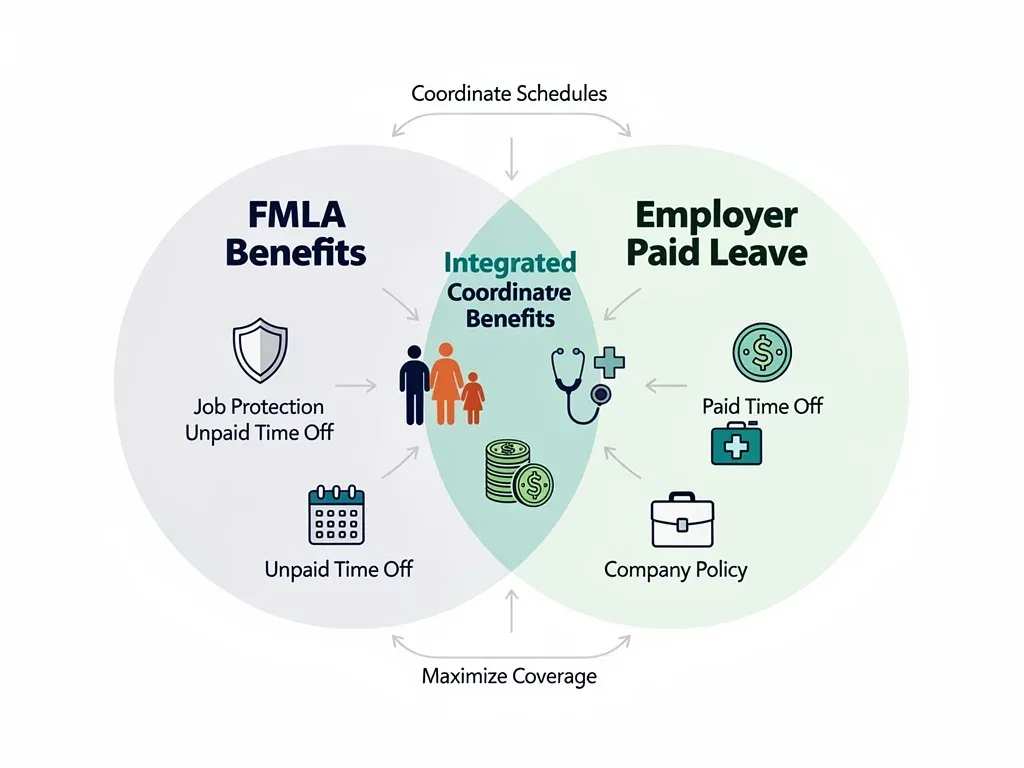
Strategic Coordination for Full Salary Protection
To achieve full salary protection, employees must strategically combine their 12 weeks of Federal FMLA with available employer paid leave. This requires a thorough understanding of both federal law and company-specific policies.
The goal is to exhaust paid leave benefits first, or concurrently, to cover as much of the FMLA period as possible. This minimizes the duration of unpaid leave, thereby protecting your income.
Navigating Employer Policies
Employees should consult their HR department or employee handbook to understand specific employer policies on leave substitution. Some companies have strict rules on which types of paid leave can be used for FMLA-qualifying events.
It is crucial to clarify if your employer mandates the use of paid leave during FMLA or if you have the option to reserve some paid time off for future use. This distinction can greatly influence your coordination strategy.
Review your company's FMLA policy and all paid leave policies (sick, vacation, personal, STD).
Understand the order in which different types of leave are applied or can be requested.
Clarify any limitations on using paid leave for specific FMLA reasons, such as bonding with a new child versus personal medical leave.
Maximizing Your Benefits
For example, if an employee has 4 weeks of sick leave and 2 weeks of vacation leave, these 6 weeks can be used to cover the first 6 weeks of their 12-week FMLA period. The remaining 6 weeks of FMLA would then be unpaid, unless other benefits apply.
Short-term disability (STD) is another critical component for personal medical leaves. If an employee qualifies for STD, it typically provides a percentage of their salary, which can run concurrently with FMLA.
Employees should inquire about any specific forms or procedures required for coordinating these benefits. Proactive communication with HR is essential to avoid misunderstandings and ensure all paperwork is filed correctly and on time.
The Role of Short-Term Disability in Salary Protection
Short-term disability (STD) plans, if offered by your employer, can be a cornerstone of salary protection during FMLA-qualifying medical leaves. These plans typically replace a portion of your income, often 60-70%, for a specified period.
It is common for STD benefits to run concurrently with FMLA leave when the leave is for the employee's own serious health condition. This means FMLA provides job protection, while STD provides partial income replacement.
Employees should understand the waiting periods, benefit duration, and percentage of salary replacement under their STD plan. These details are vital for accurately forecasting income during leave.
Communication and Documentation: Key to a Smooth Process
Effective communication with your employer's HR department is paramount when planning to coordinate 12 weeks of Federal FMLA with employer paid leave benefits. Early notification allows HR to guide you through the process and ensure proper documentation.
Providing all required medical certifications and other documentation promptly is crucial for FMLA approval and the activation of paid leave benefits. Delays in paperwork can lead to delays in benefit payments.
Essential Documentation Steps
Employees must complete all FMLA request forms accurately and on time, often including medical certification from a healthcare provider. This certification validates the need for leave under FMLA guidelines.
For paid leave benefits, separate forms or requests might be necessary, especially for short-term disability. Ensure all necessary approvals are obtained before your leave begins.
Submit FMLA request forms and medical certifications within specified deadlines.
Complete all forms for employer-provided paid leave, including short-term disability applications.
Keep copies of all submitted documents and communications with HR for your records.
Ongoing Communication During Leave
Maintain open lines of communication with your HR department throughout your leave, especially if there are any changes to your return-to-work date or medical status. This ensures seamless coordination.
Clarify expectations regarding check-ins and updates while on leave. Proactive communication helps manage employer expectations and ensures a smooth transition back to work.
Confirming your return-to-work date and any necessary accommodations well in advance helps both you and your employer prepare for your reintegration into the workplace.

Potential Pitfalls and How to Avoid Them
Despite careful planning, employees may encounter challenges when trying to coordinate 12 weeks of Federal FMLA with employer paid leave benefits. These can include misunderstandings about policies or delayed approvals.
One common pitfall is assuming that all paid leave automatically runs concurrently with FMLA. Always verify this with your HR department, as policies can differ significantly.
Another issue can be insufficient documentation, leading to delays or denial of benefits. Ensuring all paperwork is complete and submitted on time is critical to avoiding such problems.
Seeking Expert Guidance and Resources
For complex situations or if you encounter difficulties, seeking external advice can be beneficial. Employment lawyers or benefits specialists can offer clarity on your rights and options.
The Department of Labor (DOL) website provides comprehensive information on FMLA, including fact sheets and guidance for employees and employers. This is an invaluable resource for understanding your federal rights.
Additionally, employee assistance programs (EAPs) or union representatives, if applicable, can provide confidential support and guidance on navigating leave policies and coordinating benefits effectively.
Key Point | Brief Description |
|---|---|
FMLA Foundation | Provides 12 weeks of job-protected, unpaid leave for qualifying reasons. |
Paid Leave Integration | Employer-provided benefits (sick, vacation, STD) can run concurrently with FMLA for salary. |
Strategic Coordination | Plan to use paid leave first or concurrently to maximize income protection. |
Communication is Key | Proactive HR engagement and timely documentation ensure smooth process. |
Frequently Asked Questions About FMLA and Paid Leave
Can my employer require me to use paid leave during FMLA?▼
Yes, under FMLA regulations, employers can require employees to substitute accrued paid leave (like sick or vacation time) for otherwise unpaid FMLA leave. This means your paid time off will run concurrently with your FMLA entitlement, reducing the amount of unpaid leave.
Does FMLA guarantee that I will be paid during my leave?▼
No, FMLA itself only provides job-protected, unpaid leave. Salary protection comes from coordinating FMLA with employer-provided paid leave benefits, such as sick days, vacation time, or short-term disability. It's crucial to understand your company's specific policies.
What is the first step to coordinate FMLA with paid leave?▼
The first step is to notify your employer of your need for FMLA leave and consult with your Human Resources department. They can provide detailed information on how your employer's paid leave policies integrate with federal FMLA requirements, ensuring proper coordination.
Can short-term disability run at the same time as FMLA?▼
Yes, if your FMLA leave is for your own serious health condition, short-term disability benefits typically run concurrently with FMLA. While FMLA provides job protection, STD replaces a portion of your income, offering a combined approach to leave and salary protection.
What if my employer's policy is unclear about FMLA coordination?▼
If your employer's policy on coordinating FMLA and paid leave is unclear, seek clarification from your HR department in writing. If satisfactory answers are not provided, consider consulting with an employment law expert or referring to the Department of Labor's FMLA resources for guidance.
Looking Ahead: Ensuring Financial Security During Leave
The landscape of employee leave benefits is constantly evolving, making it essential for workers to stay informed about their rights and employer policies.
Proactive planning and clear communication remain the most effective tools for employees seeking to maximize their financial security during periods of FMLA-protected absence.
As workplaces adapt to changing needs, understanding how to coordinate 12 weeks of Federal FMLA with employer paid leave benefits will continue to be a vital skill. Employees should regularly review their benefits package and seek clarification on any ambiguities to ensure they are fully prepared for life's unexpected events.
The emphasis on effective coordination ensures that employees can prioritize their health and family needs without undue financial stress. Staying current on federal and state leave laws, alongside company-specific benefits, is a continuous process that empowers employees.