Mortgage Points 2026: Break-Even Analysis for 6.25% Loans
Anúncios
With 2026 home loan rates hovering near 6.25%, lowering your monthly payment feels more tempting than ever. Paying upfront for Mortgage Points can trim your interest rate, yet it requires careful math to confirm if the strategy truly pays off.
Buying down your borrowing rate reduces long-term interest charges, but that upfront closing fee ties up cash you could invest elsewhere. Running a clear break-even calculation shows exactly how many years you must keep the loan to recoup your initial outlay.
Planning to stay in your home long term, or eyeing a future refinance? Let’s break down the numbers, verified lender insights, and key market signals you need to monitor next.
Understanding Mortgage Points and Their Purpose
Mortgage points, often referred to as discount points, are essentially prepaid interest that borrowers can opt to pay at closing in exchange for a lower interest rate over the life of their loan. Each point typically costs 1% of the loan amount, and it can reduce the interest rate by a fraction of a percent, depending on market conditions and the lender.
The decision to buy down mortgage points in 2026 involves a careful calculation of the upfront cost versus the long-term savings on interest payments. This strategy is particularly relevant for those anticipating staying in their homes for an extended period, as the benefits accrue over time.
Anúncios
For a 6.25% home loan, buying down mortgage points can seem attractive, but the true value lies in determining the break-even point—the moment when the accumulated savings from lower monthly payments equal the initial cost of the points. This analysis is crucial for making an informed financial decision.
The Current Landscape for 6.25% Home Loans in 2026
As 2026 approaches, the housing market continues to evolve, influenced by inflation, Federal Reserve policies, and global economic factors. A 6.25% interest rate, while potentially higher than historic lows, represents a significant commitment for borrowers, making every percentage point reduction valuable.
Current projections from leading financial institutions suggest a dynamic interest rate environment, where small adjustments can have substantial long-term impacts on mortgage affordability. Understanding these trends is essential when considering whether to buy down mortgage points in 2026.
Anúncios
Homebuyers and those looking to refinance must evaluate their personal financial situation alongside broader market indicators. This holistic approach ensures that any decision regarding mortgage points is well-aligned with both individual goals and economic realities.
What Drives Mortgage Rates in 2026
Federal Reserve Monetary Policy: Decisions on the federal funds rate indirectly influence mortgage rates.
Inflationary Pressures: Persistent inflation can lead to higher bond yields, pushing mortgage rates up.
Economic Growth and Employment: Strong economic indicators often correlate with higher interest rates.
The interplay of these factors creates a complex environment for mortgage rates. Therefore, staying informed about economic forecasts and central bank announcements is paramount for anyone considering a home loan in 2026.
Calculating Your Break-Even Point for Mortgage Points
The core of deciding whether to buy down mortgage points is a precise break-even analysis. This calculation helps you understand how long it will take for the savings from a lower interest rate to offset the upfront cost of the points.
For a 6.25% home loan, let's consider a hypothetical scenario: a $400,000 mortgage. One point would cost $4,000. If this point reduces the interest rate to, say, 6.00%, the monthly payment savings would need to be calculated meticulously.
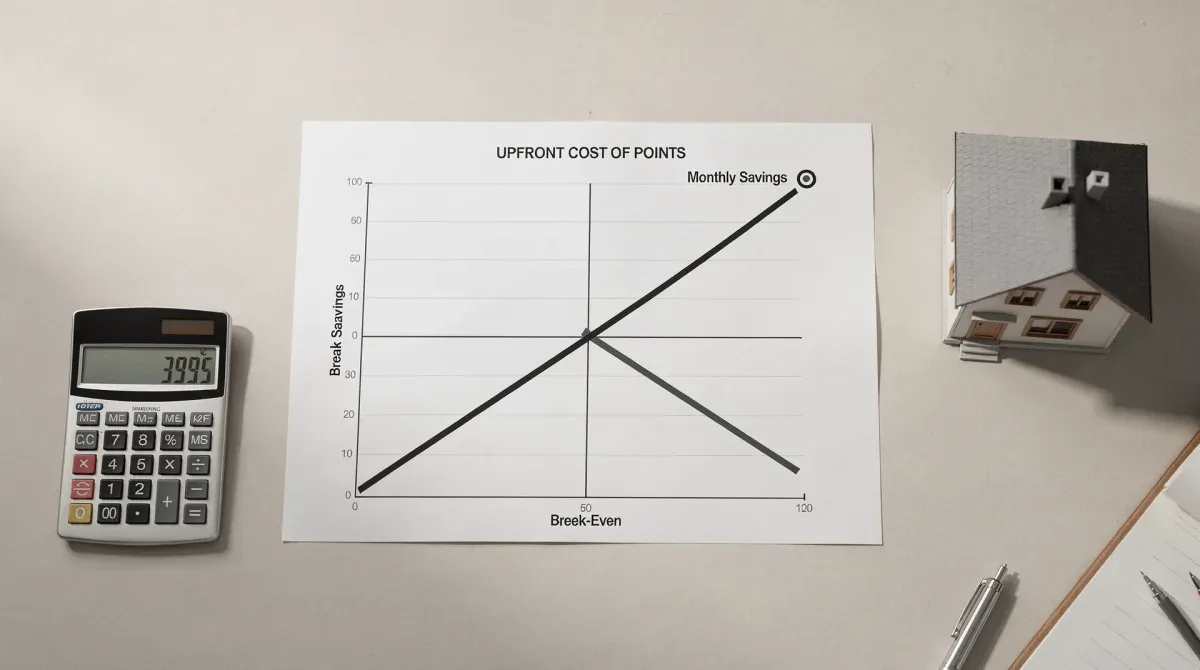
The formula for the break-even point is simple: Total Cost of Points / Monthly Savings. This figure will give you the number of months required to recoup your initial investment. It’s a critical metric for long-term financial planning.
Step-by-Step Break-Even Calculation
First, determine the upfront cost of the mortgage points. For example, if one point costs $4,000 on a $400,000 loan, this is your initial investment. Then, calculate the difference in monthly payments between the loan with and without points.
Once you have both figures, divide the upfront cost by the monthly savings. The result is the number of months it will take to break even. If you plan to stay in the home longer than this period, buying points could be financially advantageous.
For instance, if your monthly savings are $50 and your upfront cost is $4,000, your break-even point is 80 months (approximately 6.67 years). This means you would need to own the home for over six and a half years to realize net savings.
Factors Influencing the Decision to Buy Down Mortgage Points
Beyond the simple break-even calculation, several other factors should influence your decision on whether to buy down mortgage points in 2026. These include your anticipated tenure in the home, your access to liquid cash, and your personal financial goals.
If you foresee moving or refinancing within a few years, the break-even period might extend beyond your ownership horizon, negating the benefits of paying points. Conversely, a long-term commitment to the property makes the investment in points more appealing.
Availability of cash for closing costs is also a significant consideration. If paying points strains your emergency fund or prevents you from making other crucial investments, it might not be the best strategy, even if the break-even analysis looks favorable.
Personal Financial Considerations
Homeownership Horizon: How long do you plan to live in the home?
Cash Availability: Do you have sufficient funds for closing costs and an emergency reserve?
Investment Alternatives: Could your upfront cash be better invested elsewhere?
These personal factors play a crucial role in determining the overall financial wisdom of buying down mortgage points in 2026. A comprehensive review of your financial standing is essential.
Comparing Mortgage Points with Other Investment Opportunities
When you consider buying down mortgage points, it's also prudent to compare this investment against other potential uses for your capital. The money spent on points could otherwise be invested in the stock market, a retirement account, or used to pay down higher-interest debt.
The return on investment from buying down mortgage points is a guaranteed reduction in your interest rate, which translates to predictable savings over time. However, this return might be lower than what could be achieved through other investment vehicles, depending on market performance.
For individuals with high-interest credit card debt or other consumer loans, allocating funds to pay down those debts might offer a higher effective return than buying mortgage points. This comparison is vital for optimizing your overall financial health in 2026.
The decision to buy down mortgage points in 2026 should not be made in isolation. It should be part of a broader financial strategy that considers all your assets, liabilities, and investment goals. Consulting a financial advisor can provide valuable perspective.
Tax Implications of Buying Mortgage Points
An often-overlooked aspect when deciding to buy down mortgage points is their tax deductibility. In many cases, the points paid to reduce your interest rate are tax-deductible, which can further enhance their financial appeal.
The IRS generally treats discount points as prepaid interest, and they can often be deducted over the life of the loan. In some situations, they may be fully deductible in the year they are paid, particularly for a home purchase, which can provide immediate tax relief.
However, the rules surrounding the deductibility of mortgage points can be complex and are subject to change. It is always advisable to consult with a qualified tax professional to understand how buying down mortgage points in 2026 might impact your specific tax situation.
Key Tax Considerations
Deductibility as Prepaid Interest: Points are typically deductible over the loan term.
IRS Guidelines: Specific rules apply to whether points are fully deductible in the year of purchase.
Consult a Tax Advisor: Professional advice is crucial for maximizing tax benefits.
Understanding these tax implications can add another layer to your break-even analysis, potentially shortening the time it takes to recoup your investment in mortgage points for a 6.25% home loan.

Market Outlook and Future Interest Rate Predictions for 2026
The future trajectory of interest rates is a significant unknown that impacts the decision to buy down mortgage points. While no one can predict the future with certainty, understanding market forecasts can help inform your strategy in 2026.
Financial experts offer varied predictions for 2026, with some anticipating continued stability or slight decreases, while others project potential increases due to ongoing economic shifts. These predictions are critical for assessing the long-term value of buying down mortgage points.
If interest rates are expected to fall significantly in the near future, the benefit of buying points might be diminished if you plan to refinance. Conversely, if rates are projected to rise, securing a lower rate now by paying points could be a very smart move for your 6.25% home loan.
Monitoring economic reports, central bank statements, and housing market trends will provide the most up-to-date information to guide your decision on whether to buy down mortgage points in 2026. Informed anticipation is key.
Alternative Strategies for Lowering Your Mortgage Costs
If buying down mortgage points isn't the right strategy for you, or if you're exploring all options, there are alternative ways to potentially lower your mortgage costs. These strategies can provide flexibility and savings without the upfront expense of points.
One common alternative is to make a larger down payment, which can reduce your loan amount and, consequently, your monthly payments and total interest paid. Another approach is to improve your credit score before applying for a loan, as a higher score often qualifies you for better rates.
Exploring different loan terms, such as a 15-year mortgage instead of a 30-year, can also significantly reduce the total interest paid over the life of the loan, although it typically results in higher monthly payments. Each option has its own trade-offs.
Other Ways to Save on Your Mortgage
Increase Your Down Payment: Reduce the principal loan amount.
Improve Your Credit Score: Qualify for more favorable interest rates.
Consider Shorter Loan Terms: Pay less interest over the life of the loan.
These alternatives offer viable paths to reducing your overall mortgage expense, providing options for those who find the upfront cost of buying down mortgage points prohibitive or less appealing for their specific financial situation in 2026.
Key Point | Brief Description |
|---|---|
Break-Even Analysis | Calculate months to recoup upfront cost vs. monthly savings for 6.25% loans. |
Market Conditions 2026 | Assess economic factors and interest rate predictions impacting mortgage points. |
Personal Financial Goals | Consider homeownership duration, cash availability, and alternative investments. |
Tax Implications | Understand deductibility of points to maximize financial benefits for your 6.25% loan. |
Frequently Asked Questions About Mortgage Points in 2026
What are mortgage points?▼
Mortgage points are fees paid upfront to your lender in exchange for a lower interest rate on your home loan. Each point typically costs 1% of the loan amount. They are essentially prepaid interest, designed to reduce your monthly mortgage payments over time.
How do I calculate the break-even point for buying down mortgage points?▼
To calculate the break-even point, divide the total upfront cost of the points by the amount you save on your monthly mortgage payment. The result is the number of months it will take for your savings to equal the initial cost, crucial for a 6.25% home loan.
Are mortgage points tax deductible?▼
Generally, mortgage points are considered prepaid interest and can be tax-deductible. For a home purchase, they may be fully deductible in the year paid, while for refinancing, they are typically deducted over the life of the loan. Consult a tax professional for personalized advice.
When is buying down mortgage points a good idea in 2026?▼
Buying down mortgage points is often a good idea if you plan to stay in your home beyond the break-even period. For a 6.25% home loan, if market rates are expected to remain stable or rise, and you have sufficient upfront cash, it can lead to significant long-term savings.
What alternatives exist if I don't buy down points?▼
Alternatives include making a larger down payment to reduce your loan principal, improving your credit score for better rates, or opting for a shorter loan term to pay less interest overall. These strategies can also help reduce your total mortgage cost for your 6.25% home loan.
Perspectives for Homebuyers and Refinancers in 2026
The decision to Buy Down Mortgage Points in 2026 is complex, requiring a blend of personal financial assessment and an understanding of market dynamics. For many, the allure of lower monthly payments on a 6.25% loan is strong, but the upfront cost must be weighed carefully against the anticipated duration of homeownership.
As we move further into 2026, staying informed about economic indicators, Federal Reserve actions, and housing market forecasts will be paramount. These elements collectively shape the landscape for mortgage rates and influence the profitability of paying for points. The key is to approach this decision with a well-researched strategy.
Ultimately, whether to buy down mortgage points for a 6.25% home loan in 2026 comes down to individual circumstances and a thorough break-even analysis. It’s a strategic financial move that, when executed thoughtfully, can lead to substantial long-term savings and increased financial stability for homeowners across the United States.