Strategic Backdoor Roth IRA Conversions: Pro-Rata Rule Explained
Anúncios
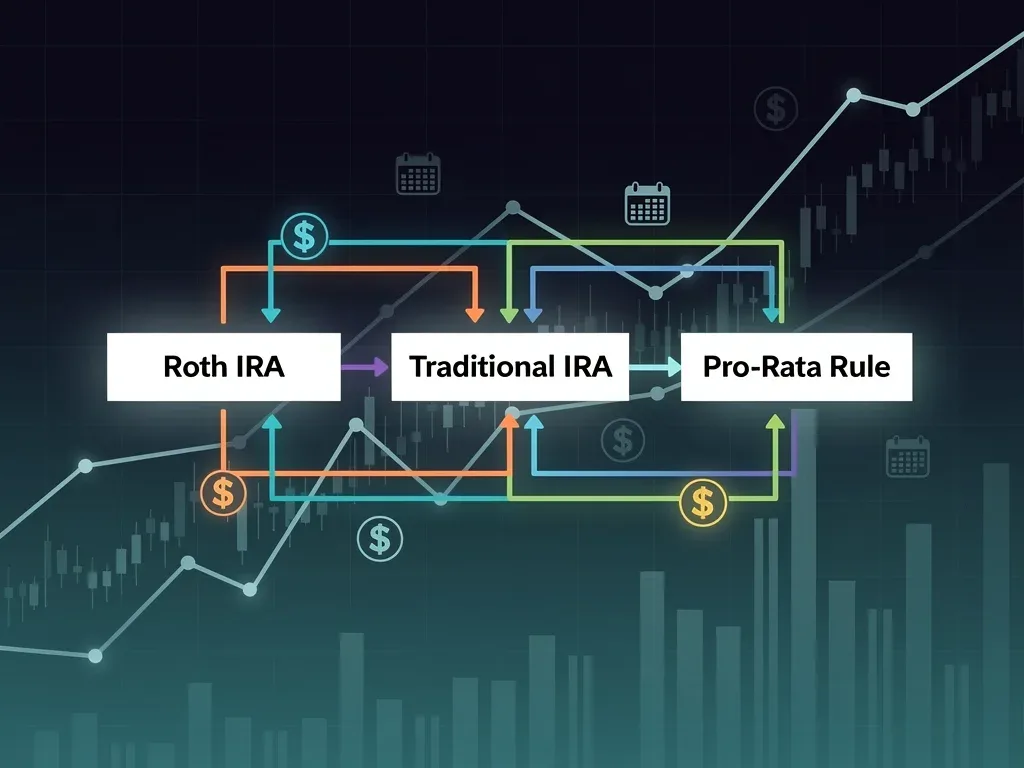
Latest developments on Strategic Backdoor Roth IRA Conversions: Managing the Pro-Rata Rule for Incomes Exceeding $165,000, with key facts, verified sources and what readers need to monitor next in Estados Unidos, presented clearly in Inglês (Estados Unidos) (en-US).
Strategic Backdoor Roth IRA Conversions: Managing the Pro-Rata Rule for Incomes Exceeding $165,000 is shaping today’s agenda with new details released by officials and industry sources. This update prioritizes what changed, why it matters and what to watch next, in a straightforward news format.
For high-income individuals, the ability to contribute directly to a Roth IRA is often limited by income thresholds. The backdoor Roth IRA conversion strategy provides a legal pathway to bypass these limits, offering significant tax advantages in retirement.
However, this strategy comes with its own set of complexities, primarily the pro-rata rule, which can significantly alter the tax implications if not properly understood and managed. Navigating this rule is paramount for those earning over $165,000.
Understanding the Backdoor Roth IRA Conversion
The backdoor Roth IRA conversion strategy allows individuals whose income exceeds the IRS limits for direct Roth IRA contributions to still fund a Roth account. This involves contributing non-deductible funds to a traditional IRA and then converting them to a Roth IRA. The process is straightforward in principle but complex in execution due to specific IRS regulations.
Anúncios
This method has become a cornerstone of retirement planning for many high-income earners seeking tax-free growth and withdrawals in retirement. However, its effectiveness hinges on a thorough understanding of the associated rules, particularly the pro-rata rule. Without proper planning, unexpected tax liabilities can arise, diminishing the benefits of the conversion.
As income thresholds continue to rise, more individuals find themselves in a position where direct Roth contributions are restricted. The Strategic Backdoor Roth IRA Conversions: Managing the Pro-Rata Rule for Incomes Exceeding $165,000 becomes an increasingly vital tool in their financial arsenal. Staying informed on current IRS guidelines is essential for optimal utilization.
The Pro-Rata Rule Explained: Impact on High Earners
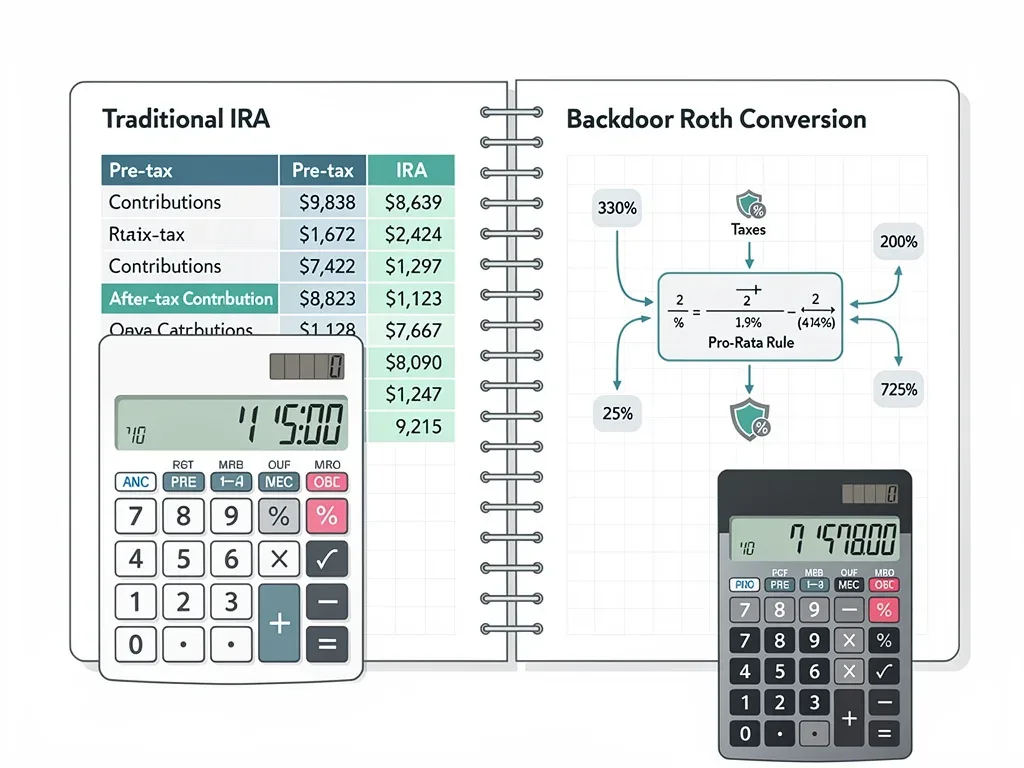
The pro-rata rule is a critical component of the backdoor Roth IRA conversion strategy, particularly relevant for those with existing pre-tax traditional IRA balances. This rule dictates that any conversion from a traditional IRA to a Roth IRA must be proportionally taxed based on the ratio of pre-tax to after-tax contributions across all your traditional IRA accounts. It is designed to prevent individuals from converting only their after-tax contributions tax-free while leaving pre-tax amounts untouched.
Anúncios
For high-income earners, this often means that if they have substantial pre-tax IRA balances (from deductible contributions or rollovers from 401(k)s), a backdoor Roth conversion will trigger a taxable event on a portion of the converted amount. Failing to account for the pro-rata rule can lead to significant and unexpected tax bills. This is where Strategic Backdoor Roth IRA Conversions: Managing the Pro-Rata Rule for Incomes Exceeding $165,000 becomes crucial.
The rule applies to all of an individual's non-Roth IRA accounts, including traditional, SEP, and SIMPLE IRAs, aggregated as of December 31st of the conversion year. This aggregation can complicate matters, requiring a comprehensive view of all retirement accounts to accurately assess potential tax implications. Understanding this aggregation is fundamental to effective planning.
Aggregating IRA Balances for Pro-Rata Calculations
When calculating the pro-rata rule, the IRS requires you to aggregate all your traditional, SEP, and SIMPLE IRA balances. This means that if you have multiple traditional IRA accounts, their combined pre-tax and after-tax balances are used to determine the taxable portion of your Roth conversion. This aggregation principle is often overlooked, leading to errors.
For example, if you have $95,000 in a pre-tax traditional IRA and contribute $5,000 non-deductible to another traditional IRA before converting, only a small portion of that $5,000 will be tax-free. The pro-rata rule considers the total value of all non-Roth IRAs. This highlights why Strategic Backdoor Roth IRA Conversions: Managing the Pro-Rata Rule for Incomes Exceeding $165,000 requires careful attention to detail.
- Total IRA Balance: Sum of all traditional, SEP, and SIMPLE IRA accounts.
- After-Tax Contributions: Total non-deductible contributions made across all IRAs.
- Taxable Portion: Calculated as (Pre-Tax IRA Balance / Total IRA Balance) * Converted Amount.
Avoiding the Pro-Rata Trap: The 'Zero Balance' Strategy
The most effective way to avoid the pro-rata rule when executing a backdoor Roth IRA conversion is to have a zero balance in all pre-tax traditional IRAs at the end of the year. This strategy involves rolling over any existing pre-tax IRA funds into a 401(k) or other employer-sponsored retirement plan. This move effectively removes those pre-tax funds from the IRA aggregation, allowing the non-deductible IRA contribution to be converted tax-free.
This 'zero balance' strategy is a key tactic within Strategic Backdoor Roth IRA Conversions: Managing the Pro-Rata Rule for Incomes Exceeding $165,000. It requires proactive planning, often necessitating coordination with your employer's retirement plan administrator. The timing of these rollovers is also crucial, ideally completed before the end of the year in which the Roth conversion takes place.
- Employer Plan Rollover: Move pre-tax IRA funds into a 401(k) or similar plan.
- Zero IRA Balance: Ensure no pre-tax funds remain in any traditional IRA.
- Tax-Free Conversion: Convert non-deductible IRA contributions without pro-rata taxation.
Strategic Timing for Conversions and Rollovers
Timing plays a crucial role in optimizing Strategic Backdoor Roth IRA Conversions: Managing the Pro-Rata Rule for Incomes Exceeding $165,000. It is generally advisable to make the non-deductible traditional IRA contribution and immediately convert it to a Roth IRA. This minimizes the time any earnings can accrue in the traditional IRA, which would then become taxable upon conversion.
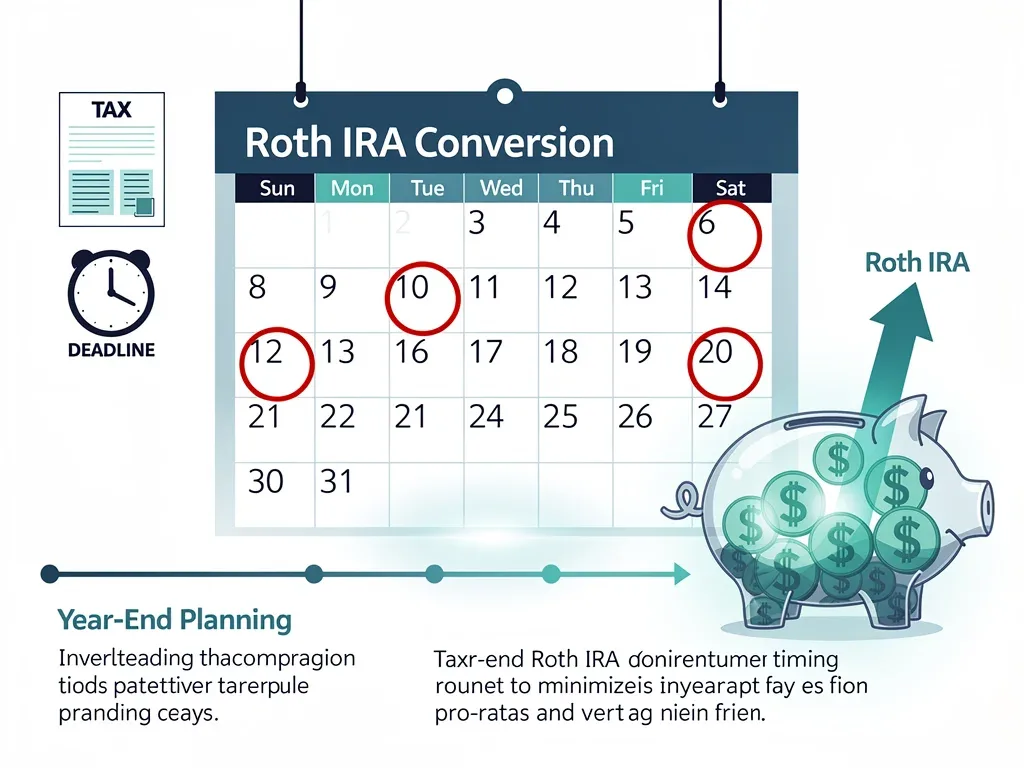
Furthermore, if you are employing the 'zero balance' strategy by rolling over pre-tax IRA funds into a 401(k), this rollover must be completed by December 31st of the year you perform the Roth conversion. The IRS looks at your aggregate IRA balances on this date. Therefore, meticulous year-end planning is essential to ensure compliance and avoid unexpected tax liabilities.
Consulting with a financial advisor or tax professional is highly recommended to navigate these timing complexities. They can help ensure all steps are executed correctly and within the required deadlines, safeguarding your Strategic Backdoor Roth IRA Conversions: Managing the Pro-Rata Rule for Incomes Exceeding $165,000 from potential pitfalls. Proper timing can significantly impact the tax efficiency of your conversion.
The Tax Implications of Not Managing the Pro-Rata Rule
Ignoring or misunderstanding the pro-rata rule can lead to significant and unexpected tax consequences for high-income earners attempting a backdoor Roth IRA conversion. If you have pre-tax IRA balances and do not properly manage them, a portion of your Roth conversion will be considered taxable income, even if you only converted after-tax contributions. This can erode the tax benefits you sought to achieve.
For instance, if you convert $6,000 of non-deductible contributions but have $54,000 in pre-tax IRA funds, the pro-rata rule would dictate that only 10% ($6,000 / $60,000 total IRA balance) of your conversion is tax-free. The remaining 90% would be taxable, even though you started with after-tax money. This scenario undermines the core purpose of Strategic Backdoor Roth IRA Conversions: Managing the Pro-Rata Rule for Incomes Exceeding $165,000.
These unexpected tax liabilities can be substantial, especially for individuals already in higher tax brackets. It underscores the importance of thoroughly understanding the pro-rata rule and implementing effective strategies to mitigate its impact. Proper planning is not merely a recommendation; it is a necessity for successful backdoor Roth conversions. The goal is to maximize the benefits of Strategic Backdoor Roth IRA Conversions: Managing the Pro-Rata Rule for Incomes Exceeding $165,000.
Reporting Backdoor Roth Conversions to the IRS
Accurate reporting of Strategic Backdoor Roth IRA Conversions: Managing the Pro-Rata Rule for Incomes Exceeding $165,000 to the IRS is non-negotiable. This involves filing Form 8606, 'Nondeductible IRAs,' which tracks your non-deductible traditional IRA contributions and Roth conversions. Failing to file this form correctly can lead to penalties and complicate future tax filings.
Form 8606 helps the IRS track the basis (after-tax contributions) in your traditional IRAs, which is essential for applying the pro-rata rule correctly. Even if your backdoor Roth conversion results in no taxable income, you must still file this form to document your non-deductible contributions and the conversion itself. This ensures proper accounting for your tax-free basis.
It is advisable to keep detailed records of all traditional IRA contributions, conversions, and associated tax forms. This documentation will be invaluable in the event of an IRS inquiry or for future financial planning. Proper reporting is a critical step in the successful execution of Strategic Backdoor Roth IRA Conversions: Managing the Pro-Rata Rule for Incomes Exceeding $165,000.
Case Studies: High-Income Earners and the Pro-Rata Rule
Consider Jane, a software executive earning $250,000 annually. She wants to contribute to a Roth IRA but is over the income limit. Jane has an existing traditional IRA with $100,000 from a previous 401(k) rollover, all of which is pre-tax. If she contributes $6,500 non-deductible to a new traditional IRA and immediately converts it to a Roth without addressing her existing IRA, the pro-rata rule applies. Approximately 94% ($100,000 / $106,500) of her $6,500 conversion, or about $6,118, would be taxable. This demonstrates the impact of neglecting Strategic Backdoor Roth IRA Conversions: Managing the Pro-Rata Rule for Incomes Exceeding $165,000.
In contrast, John, a physician earning $300,000, also wishes to use a backdoor Roth. John has $150,000 in a pre-tax traditional IRA. Before making his non-deductible contribution, he rolls his entire $150,000 traditional IRA balance into his current employer's 401(k) plan. This leaves his traditional IRA balance at zero. He then contributes $6,500 non-deductible to a traditional IRA and converts it to a Roth IRA. Due to the zero balance strategy, his entire $6,500 conversion is tax-free. This illustrates the power of Strategic Backdoor Roth IRA Conversions: Managing the Pro-Rata Rule for Incomes Exceeding $165,000 effectively.
These examples underscore the varying outcomes based on how the pro-rata rule is managed. Jane faces an unexpected tax bill, while John successfully navigates the process tax-free. The key difference lies in proactive planning and utilizing available strategies to mitigate the pro-rata rule's impact. These real-world scenarios highlight the complexities and solutions within Strategic Backdoor Roth IRA Conversions: Managing the Pro-Rata Rule for Incomes Exceeding $165,000.
Future Outlook and Potential Legislative Changes
The landscape of retirement planning, particularly concerning Roth conversions, is subject to potential legislative changes. Historically, proposals have emerged to eliminate or restrict the backdoor Roth IRA strategy, citing concerns about its use by high-income individuals. While such proposals have not yet become law, they highlight the dynamic nature of tax legislation and the need for vigilance. This makes Strategic Backdoor Roth IRA Conversions: Managing the Pro-Rata Rule for Incomes Exceeding $165,000 a topic of ongoing relevance.
Financial advisors and tax professionals continually monitor these legislative developments to provide the most up-to-date guidance to their clients. Any changes could significantly impact the viability and tax efficiency of the backdoor Roth strategy. Staying informed about potential reforms is crucial for long-term financial planning and adapting strategies as needed. The future of Strategic Backdoor Roth IRA Conversions: Managing the Pro-Rata Rule for Incomes Exceeding $165,000 remains a subject of debate.
For now, the backdoor Roth IRA remains a legitimate and powerful tool for high-income earners. However, individuals should operate under the assumption that current rules may not persist indefinitely. Prudent planning involves maximizing current opportunities while remaining flexible enough to adjust to any future legislative shifts that could affect Strategic Backdoor Roth IRA Conversions: Managing the Pro-Rata Rule for Incomes Exceeding $165,000. Awareness is key to navigating these potential changes.
| Key Point | Brief Description |
|---|---|
| Backdoor Roth Purpose | Allows high-income earners to contribute to Roth IRAs indirectly. |
| Pro-Rata Rule | Taxes conversions proportionally if pre-tax IRA funds exist. |
| Zero Balance Strategy | Roll pre-tax IRAs to 401(k) to avoid pro-rata taxation. |
| Reporting Requirement | File Form 8606 for non-deductible contributions and conversions. |
Frequently Asked Questions About Backdoor Roth Conversions
What is a backdoor Roth IRA conversion?▼A backdoor Roth IRA conversion is a strategy for high-income individuals to contribute to a Roth IRA. It involves making a non-deductible contribution to a traditional IRA and then converting those funds to a Roth IRA, bypassing direct income limits. This allows for tax-free growth and withdrawals in retirement, providing significant financial benefits.
How does the pro-rata rule affect backdoor Roth conversions?▼The pro-rata rule mandates that if you have existing pre-tax traditional IRA balances, any Roth conversion must be taxed proportionally. This means a portion of your conversion, even from after-tax contributions, becomes taxable. It aggregates all non-Roth IRA accounts, making careful planning essential to avoid unexpected tax liabilities for Strategic Backdoor Roth IRA Conversions: Managing the Pro-Rata Rule for Incomes Exceeding $165,000.
Who needs to worry about the pro-rata rule?▼Individuals with existing pre-tax balances in traditional, SEP, or SIMPLE IRAs need to be concerned about the pro-rata rule. High-income earners, especially those with incomes exceeding $165,000, who plan to utilize Strategic Backdoor Roth IRA Conversions: Managing the Pro-Rata Rule for Incomes Exceeding $165,000, must understand and manage this rule. Those with only after-tax IRA contributions and no pre-tax balances are generally exempt.
What is the 'zero balance' strategy?▼The 'zero balance' strategy is a method to avoid the pro-rata rule. It involves rolling over all pre-tax traditional IRA funds into an employer-sponsored retirement plan, like a 401(k), before performing a Roth conversion. This ensures that the traditional IRA balance is zero, allowing the non-deductible contributions to be converted tax-free. This is a critical component of Strategic Backdoor Roth IRA Conversions: Managing the Pro-Rata Rule for Incomes Exceeding $165,000.
Is the backdoor Roth IRA conversion strategy at risk of being eliminated?▼While the backdoor Roth IRA strategy is currently legal, there have been legislative proposals to eliminate or restrict it in the past. These proposals often target high-income earners' ability to use this method. While no changes have been enacted, it's crucial for individuals utilizing Strategic Backdoor Roth IRA Conversions: Managing the Pro-Rata Rule for Incomes Exceeding $165,000 to stay informed about potential legislative developments, as future rules could impact its viability.
Looking Ahead
The intricacies of Strategic Backdoor Roth IRA Conversions: Managing the Pro-Rata Rule for Incomes Exceeding $165,000 demand meticulous attention to detail and proactive planning. While the strategy offers significant tax advantages for high-income individuals, its effectiveness is entirely dependent on correctly navigating the pro-rata rule and accurate IRS reporting. Future legislative changes could alter this landscape, necessitating continuous monitoring and adaptability in financial strategies.