Understanding 2026 U.S. Immigration Reform: Key Debates & Outcomes
Anúncios
Latest developments on Understanding the 2026 U.S. Immigration Reform Proposals: Key Debates and Potential Outcomes, with key facts, verified sources and what readers need to monitor next in Estados Unidos, presented clearly in Inglês (Estados Unidos) (en-US).
Understanding the 2026 U.S. Immigration Reform Proposals: Key Debates and Potential Outcomes is shaping today’s agenda with new details released by officials and industry sources. This update prioritizes what changed, why it matters and what to watch next, in a straightforward news format.
The Urgency of 2026 US Immigration Reform
The discussions surrounding 2026 US immigration reform have intensified, reflecting a growing recognition of the need for comprehensive changes to the existing system. Political leaders, advocacy groups, and economists are all weighing in on the various proposals currently on the table.
Anúncios
The current immigration framework, largely a patchwork of policies enacted over decades, faces significant challenges in addressing modern realities. This includes issues related to border security, labor shortages, and the integration of immigrant communities into American society.
As the 2026 deadline approaches, the urgency to find common ground and enact meaningful legislation becomes more apparent. The outcome will undoubtedly have profound and lasting effects on the nation’s demographics, economy, and social fabric.
Key Legislative Proposals and Their Foundations
Several distinct legislative proposals are emerging as frontrunners in the debate over 2026 US immigration reform. These proposals often reflect different ideological approaches to immigration, ranging from stricter enforcement to more expansive pathways to legal status.
Anúncios
One set of proposals focuses heavily on enhancing border security measures, including increased funding for technology, personnel, and physical barriers. Proponents argue these steps are essential for maintaining national sovereignty and controlling irregular migration flows.
Another significant category of proposals aims to address the status of undocumented immigrants already residing in the U.S., offering various forms of legalization or pathways to citizenship. These initiatives often include provisions for DACA recipients and long-term residents who have established lives in the country.
The economic implications of immigration reform are a central theme across all proposals. Discussions revolve around how new policies could impact labor markets, economic growth, and federal spending, with various studies offering differing projections.
Border Security Enhancements
- Increased deployment of advanced surveillance technology along the U.S.-Mexico border.
- Additional funding for Customs and Border Protection (CBP) personnel and training programs.
- Expansion of physical infrastructure, including new fencing and repair of existing barriers.
The debate around border security often pits advocates for robust enforcement against those who emphasize humanitarian concerns. Finding a balance that effectively secures the border while upholding human rights remains a significant challenge for lawmakers.
Pathways to Legal Status
- Provisions for DACA recipients to apply for permanent residency or citizenship.
- Potential creation of new visa categories for essential workers in key industries.
- Streamlined processes for family-based immigration and asylum claims.
These proposals aim to regularize the status of millions, potentially boosting economic contributions and reducing the shadow economy. However, they also face opposition from those concerned about potential impacts on national security and social services.
Economic Impacts and Labor Market Dynamics
The economic dimensions of Understanding the 2026 U.S. Immigration Reform Proposals: Key Debates and Potential Outcomes are a critical aspect of the national conversation. Immigration has historically played a significant role in the U.S. economy, filling labor gaps and contributing to innovation and entrepreneurship.
Proponents of more expansive immigration policies often highlight the potential for increased economic growth, as new immigrants contribute to the workforce, consume goods and services, and often start new businesses. They argue that immigration can offset an aging native-born workforce and maintain economic dynamism.
Conversely, some argue that increased immigration, particularly in certain sectors, could depress wages for native-born workers or strain public services. These concerns often fuel debates about the optimal level and type of immigration needed for the U.S. economy.
Different sectors of the economy, from agriculture to technology, rely heavily on immigrant labor. Any changes to immigration policy will therefore have sector-specific impacts that must be carefully considered by policymakers.
Impact on Wages and Employment
Studies on the impact of immigration on wages and employment show mixed results, often depending on the skill level of immigrants and the specific industries involved. Many economists suggest that high-skilled immigration has a net positive effect, while the impact of low-skilled immigration is more debated.
The integration of immigrant workers into the labor market can lead to increased productivity and specialization, benefiting the economy as a whole. However, it also necessitates robust workforce development and training programs to ensure smooth transitions for all workers.
The 2026 US immigration reform seeks to optimize these dynamics, addressing both the needs of employers and the concerns of the domestic workforce. This balance is crucial for sustainable economic growth.
Sector-Specific Needs
The agricultural sector, for instance, heavily relies on seasonal immigrant labor, and any reform must consider its unique workforce requirements. Similarly, the tech and healthcare industries often advocate for policies that attract and retain high-skilled foreign professionals.
Understanding these sector-specific needs is vital for crafting immigration policies that support, rather than hinder, key American industries. The reforms aim to create a more responsive and efficient system.
The ongoing discussions emphasize the need for a nuanced approach that recognizes the diverse contributions of immigrants across various economic segments. The goal is to maximize economic benefits while mitigating potential challenges.
Humanitarian Concerns and Social Integration
Beyond economic and security considerations, Understanding the 2026 U.S. Immigration Reform Proposals: Key Debates and Potential Outcomes also involves profound humanitarian and social integration aspects. The treatment of asylum seekers, refugees, and families seeking reunification is a central ethical concern.
Advocacy groups consistently highlight the importance of upholding international human rights standards and providing due process for all individuals, regardless of their immigration status. They argue for policies that prioritize compassion and dignity.
The social integration of immigrants into American communities is another key area of discussion. This includes access to education, healthcare, and social services, as well as the challenges and opportunities associated with cultural assimilation and diversity.
Proposals often include provisions for language acquisition programs, job training, and community support services designed to help new arrivals thrive. These initiatives are seen as investments in the long-term success of both immigrants and their host communities.
Asylum and Refugee Policies
- Streamlining the asylum application process to ensure timely and fair hearings.
- Increasing resources for humanitarian aid and support services at the border.
- Re-evaluating the criteria for refugee resettlement to align with global crises.
The current system for processing asylum claims faces significant backlogs and criticisms regarding its efficiency and fairness. Reforms aim to create a more humane and effective system for those seeking protection.
Community Integration Programs
- Funding for English language learning and vocational training programs.
- Support for community organizations that assist immigrants with housing and employment.
- Initiatives to promote cultural exchange and understanding between immigrant and native-born populations.
Successful integration benefits both immigrants and society by fostering economic self-sufficiency and social cohesion. These programs are often seen as vital for the long-term success of immigration policies.
Political Divides and Bipartisan Challenges
The political landscape surrounding 2026 US immigration reform is marked by deep partisan divisions, making bipartisan consensus incredibly challenging. Historical attempts at comprehensive reform have often faltered due to these entrenched differences.
Democrats generally advocate for more expansive pathways to legal status and emphasize humanitarian considerations, while Republicans tend to prioritize border security and stricter enforcement measures. Bridging this ideological gap requires significant political will and compromise.
Public opinion on immigration is also highly polarized, reflecting the diverse values and concerns of the American electorate. This makes it difficult for lawmakers to craft policies that satisfy a broad base of constituents.
Despite the challenges, there is a recognized need for reform across the political spectrum. The current system is widely seen as unsustainable, prompting calls for pragmatic solutions that can garner sufficient support to pass into law.
Areas of Potential Compromise
Some areas of potential bipartisan agreement include modernizing visa processing systems, addressing specific labor shortages, and increasing resources for border technology. These practical solutions may offer common ground where broader ideological debates often stall.
Discussions around a balanced approach, combining enhanced enforcement with targeted legalization programs, are frequently put forward. However, the exact details of such a compromise remain a significant hurdle.
The political climate leading up to 2026 will undoubtedly influence the feasibility of any major immigration reform. Election cycles and shifting public priorities often dictate the pace and direction of legislative efforts.
State and Local Government Perspectives
While Understanding the 2026 U.S. Immigration Reform Proposals: Key Debates and Potential Outcomes is primarily a federal undertaking, state and local governments play a crucial role in its implementation and experience its direct effects. These entities often bear the brunt of managing immigration-related challenges and opportunities.
States with large immigrant populations, particularly those bordering Mexico, face unique pressures related to healthcare, education, and social services. Their experiences and needs are vital to consider in any comprehensive reform plan.
Local governments often develop their own policies and programs to address the needs of immigrant communities, sometimes creating a complex interplay with federal laws. These local initiatives can provide valuable insights into effective integration strategies.
The fiscal impact on state and local budgets is a significant concern, with debates over federal funding for services provided to immigrant populations. Any reform must consider how these costs will be distributed and supported.
Impact on Public Services
- Increased demand for public education, particularly for English language learners.
- Strain on local healthcare systems in areas with high immigrant concentrations.
- Challenges in providing adequate housing and social welfare programs.
State and local authorities often call for greater federal support to manage these demands, emphasizing that immigration is a national issue requiring national resources. The success of reform hinges on effective intergovernmental cooperation.
Local Economic Contributions
Immigrants often revitalize local economies by filling jobs, starting businesses, and contributing to the tax base. Many local leaders recognize these contributions and advocate for policies that facilitate successful integration and economic participation.
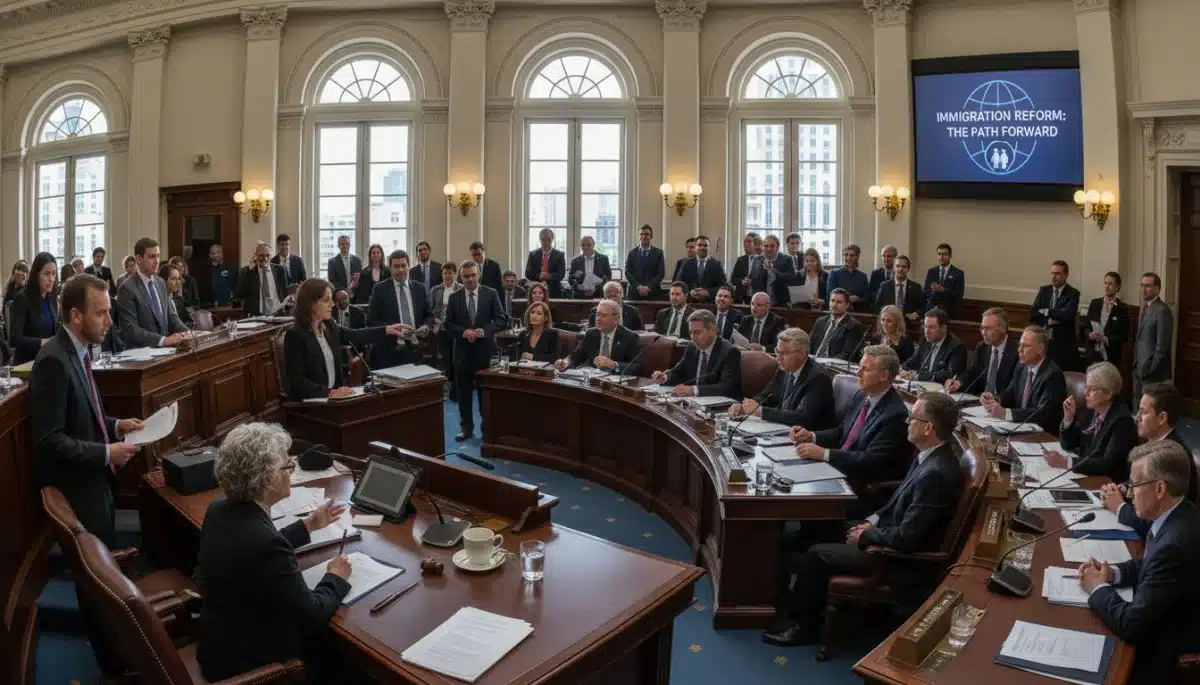
Understanding the local economic benefits of immigration is essential for a balanced policy discussion. Local success stories can inform national strategies and demonstrate the positive impacts of well-managed immigration.
Technological Advancements and Data Management
The role of technology in Understanding the 2026 U.S. Immigration Reform Proposals: Key Debates and Potential Outcomes is becoming increasingly prominent. Advancements in data management, biometrics, and artificial intelligence offer new possibilities for border security and immigration processing.
Proposals often include provisions for investing in cutting-edge technologies to enhance the efficiency and security of the immigration system. This includes advanced screening tools, secure digital identity systems, and improved data sharing among agencies.
The use of technology raises important questions about privacy, civil liberties, and algorithmic bias. Ensuring that technological solutions are implemented ethically and effectively is a key challenge for policymakers.
These technological solutions aim to streamline processes, reduce backlogs, and improve the overall integrity of the immigration system. However, they also require significant investment and careful oversight to prevent unintended consequences.
Biometric Security Measures
- Expanded use of facial recognition and fingerprint scanning for identity verification.
- Development of secure digital platforms for visa applications and background checks.
- Integration of biometric data across various government databases for enhanced security.
Biometric technologies offer significant potential for improving security and efficiency but must be balanced against concerns about data privacy and potential misuse. Public trust is paramount for their successful implementation.
Data Analytics for Immigration Management
Leveraging big data analytics can help identify trends in migration patterns, optimize resource allocation, and improve the targeting of enforcement efforts. This data-driven approach aims to make the immigration system more responsive and adaptable.
However, the ethical implications of using predictive analytics in immigration contexts, such as potential profiling or discriminatory outcomes, must be carefully addressed. Transparency and accountability are crucial.
International Relations and Global Context
Understanding the 2026 U.S. Immigration Reform Proposals: Key Debates and Potential Outcomes cannot be fully grasped without considering its international dimensions. U.S. immigration policy has significant implications for its relationships with other countries, particularly those in Central and South America.
Cooperation with neighboring countries on border management, migrant protection, and addressing root causes of migration is essential for effective reform. Diplomatic efforts play a critical role in these international partnerships.
Global migration trends, including climate-induced displacement and geopolitical instability, also influence the pressures on the U.S. immigration system. These broader international factors necessitate a comprehensive and adaptable policy response.
The U.S. role as a global leader in humanitarian aid and refugee resettlement is also intrinsically linked to its domestic immigration policies. How the U.S. manages its borders and treats migrants can influence its international standing.
Cooperation with Sending Countries
Engaging with countries of origin to address economic instability, violence, and lack of opportunity can help reduce irregular migration flows. Development aid and diplomatic initiatives are key components of this strategy.
Agreements on safe and orderly migration pathways, including temporary worker programs, can also benefit both the U.S. and sending countries. These partnerships aim to create mutually beneficial solutions.
The success of U.S. immigration reform often depends on the level of cooperation and trust established with its international partners. Building these relationships is a long-term diplomatic endeavor.
Public Opinion and Advocacy Efforts
Public opinion plays a significant role in shaping the debate around 2026 US immigration reform. Various polls and surveys reveal a complex and often contradictory set of views among American citizens regarding immigration policy.
Advocacy groups on all sides of the issue are actively engaged in shaping public discourse, lobbying lawmakers, and mobilizing their bases. Their efforts help to highlight different perspectives and influence the policy agenda.
The media also plays a crucial role in informing public opinion, with news coverage often focusing on specific aspects of immigration, such as border crises or individual stories of immigrants. The narrative presented can significantly impact public perception.
Understanding the diverse perspectives and concerns of the American public is essential for crafting immigration policies that are not only effective but also politically viable. Public engagement is a continuous process.
Role of Advocacy Organizations
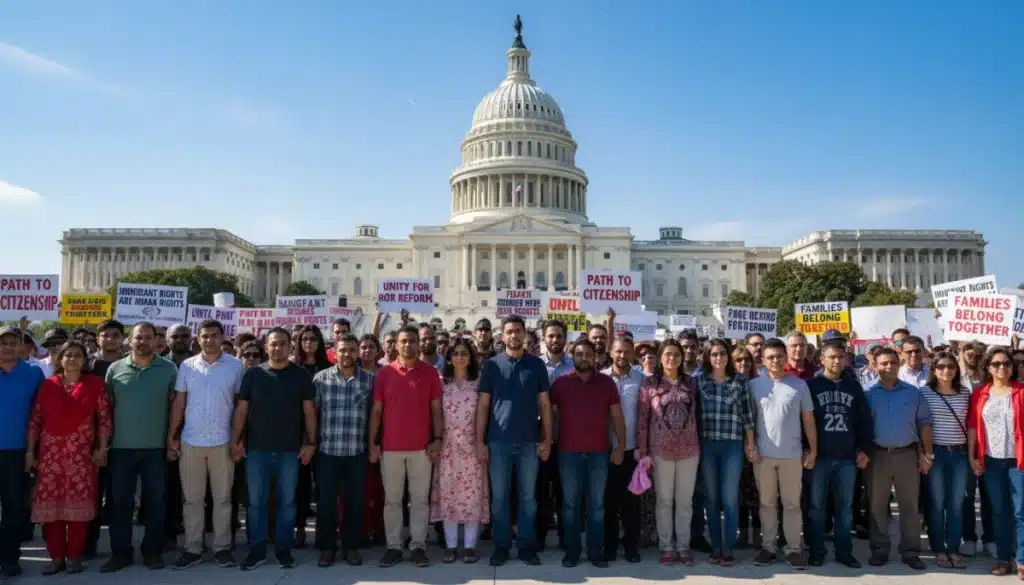
- Organizing rallies and public demonstrations to raise awareness and pressure policymakers.
- Publishing research and reports to inform the public and influence policy debates.
- Providing legal aid and support services to immigrant communities.
These organizations serve as vital conduits for community voices and often bring critical human perspectives to the legislative process. Their sustained efforts are key to driving policy change.
Media Coverage and Framing
The way immigration is framed in media coverage can significantly impact public perception, influencing policy debates and electoral outcomes. Balanced and factual reporting is crucial for an informed public discourse.
Journalists play a critical role in providing context, fact-checking claims, and presenting diverse viewpoints on Understanding the 2026 U.S. Immigration Reform Proposals: Key Debates and Potential Outcomes. This helps to foster a more nuanced understanding of the complexities involved.
| Key Point | Brief Description |
|---|---|
| Core Proposals | Legislative initiatives focusing on border security and pathways to legal status. |
| Economic Impact | Debates on labor market dynamics, wages, and sector-specific needs. |
| Humanitarian Aspects | Focus on asylum, refugee policies, and social integration of immigrants. |
| Political Challenges | Bipartisan divisions and the search for common ground in a polarized landscape. |
Frequently Asked Questions About 2026 US Immigration Reform
The primary goals generally include enhancing border security, streamlining legal immigration pathways, addressing the status of undocumented immigrants, and optimizing the economic contributions of immigrants. These proposals aim to create a more efficient and equitable system that responds to current national needs and challenges.
The reforms could significantly impact labor markets, potentially filling shortages in key sectors and boosting economic growth through increased consumption and entrepreneurship. However, debates persist regarding potential effects on wages and public services, emphasizing the need for balanced policy to maximize benefits and mitigate risks.
Humanitarian concerns are central, focusing on the treatment of asylum seekers, refugees, and family reunification. Proposals often seek to ensure due process, provide adequate support services, and uphold human rights, aiming for a more compassionate and dignified approach to immigration management.
Deep partisan divisions and polarized public opinion are significant hurdles. Bridging ideological gaps between stricter enforcement and more expansive legal pathways requires substantial political will and compromise. Finding common ground that satisfies a broad range of stakeholders remains a persistent challenge for lawmakers.
State and local governments will experience direct impacts on public services like education and healthcare, especially in areas with large immigrant populations. They often develop unique programs to support integration, and federal reforms must consider their needs and provide adequate funding and support for effective implementation.
What this means
The ongoing discussions around Understanding the 2026 U.S. Immigration Reform Proposals: Key Debates and Potential Outcomes highlight a critical juncture for the nation. The eventual legislative decisions will not only redefine who can enter and reside in the U.S. but also profoundly shape its economic future, social fabric, and international standing. Citizens and policymakers alike must remain engaged, monitoring developments closely as these complex proposals move through the legislative process, with potential outcomes poised to impact every facet of American life.
Autor