2026 HSA Contribution Limit: Supercharge Employer Benefits
Anúncios
Are you taking full advantage of pre-tax health accounts to offset rising medical costs? The updated 2026 HSA Contribution Limit allows employees and employers to deposit significantly more tax-advantaged dollars into health savings accounts.
Leveraging these higher annual caps turns everyday healthcare expenses into a powerful strategy for lowering taxable income.
For organizations structuring high-deductible health plans, expanding employer match contributions strengthens overall compensation packages. These triple-tax-advantaged medical funds grow tax-free, helping workers build a dedicated financial safety net for both current medical bills and long-term healthcare needs.
Maximizing these updated IRS deposit thresholds helps both individuals and business leaders optimize corporate wellness programs. Re-evaluating your open enrollment choices now ensures you capture every dollar of payroll tax savings for the upcoming plan year.
Understanding the New 2026 HSA Contribution Limit
The Internal Revenue Service (IRS) recently announced the new 2026 HSA contribution limit, setting it at $4,300 for self-only coverage. This increase represents a significant adjustment, impacting how individuals and employers approach health savings.
Anúncios
For family coverage, the limit is expected to be substantially higher, reflecting the rising costs of healthcare and the government's effort to encourage health savings. This change provides a critical opportunity for strategic financial planning within employer-sponsored health benefits.
Employers and employees alike must understand these new figures to maximize the benefits of Health Savings Accounts (HSAs), which offer triple tax advantages. The new 2026 HSA contribution limit directly influences benefit design and employee financial wellness programs.

Implications for Employer-Sponsored Health Benefits
The increased 2026 HSA contribution limit presents both challenges and opportunities for employers offering High Deductible Health Plans (HDHPs). Companies must reassess their current benefit structures to align with the new limits and communicate these changes effectively to their workforce.
Anúncios
This adjustment can significantly enhance the attractiveness of HDHPs when paired with robust HSA contributions. Employers can leverage this higher limit to design more competitive and financially appealing health benefit packages.
Furthermore, the ability for employees to save more tax-free can lead to greater engagement with health and wellness initiatives. This makes the 2026 HSA contribution limit a pivotal factor in comprehensive benefits strategy.
Strategic Adjustments for Businesses
Businesses should review their current contribution strategies to ensure they are taking full advantage of the updated limits. This might involve increasing employer contributions or offering educational resources to employees.
Aligning benefit offerings with the new 2026 HSA contribution limit can improve employee retention and attraction, as robust health benefits are a key factor in job satisfaction. Proactive planning is essential to integrate these changes seamlessly.
Moreover, employers can use this opportunity to reinforce the long-term financial benefits of HSAs, such as their role in retirement planning. Educating employees on these advantages will be crucial for successful adoption.
Enhancing Employee Engagement with HSAs
With the 2026 HSA contribution limit rising, employers have a stronger case for encouraging employee participation in HSAs. Clear communication about the tax advantages and long-term savings potential is vital.
Workshops and informational sessions can help employees understand how to best utilize their HSAs, from covering current medical expenses to saving for future healthcare costs. This proactive approach fosters financial literacy and wellness.
Ultimately, a well-informed workforce is more likely to engage with their health benefits. Employers who facilitate this understanding around the 2026 HSA contribution limit will see higher participation rates and greater employee satisfaction.
Maximizing Personal Savings with the New Limit
For individuals, the new 2026 HSA contribution limit means more money can be set aside tax-free for healthcare expenses. This provides a powerful tool for managing both immediate and future medical costs, offering significant financial flexibility.
The triple tax advantage of HSAs—tax-deductible contributions, tax-free growth, and tax-free withdrawals for qualified medical expenses—becomes even more impactful with a higher contribution ceiling. This makes HSAs an indispensable part of personal financial planning.
Individuals should work with their employers and financial advisors to understand how to best leverage the 2026 HSA contribution limit. Strategic contributions can lead to substantial long-term savings and financial security.
Understanding the Triple Tax Advantage
The triple tax advantage of HSAs is a cornerstone of their appeal: contributions are tax-deductible, earnings grow tax-free, and withdrawals for qualified medical expenses are also tax-free. This makes them a uniquely powerful savings vehicle.
With the higher 2026 HSA contribution limit, these tax benefits are amplified, allowing individuals to accumulate a larger tax-advantaged sum. This is particularly beneficial for those planning for retirement healthcare costs.
Understanding these tax benefits is critical for individuals to fully appreciate the value of their HSA. Employers play a key role in communicating these advantages to their employees.
Strategies for Optimal HSA Utilization
To fully benefit from the 2026 HSA contribution limit, individuals should consider contributing the maximum amount possible each year. This accelerates the growth of their tax-free savings.
Another effective strategy is to pay for current medical expenses out-of-pocket, if feasible, and allow HSA funds to grow untouched. This turns the HSA into a powerful long-term investment vehicle.
Keeping meticulous records of medical expenses is also important, as this allows for tax-free reimbursements from the HSA years down the line. These strategies maximize the impact of the increased 2026 HSA contribution limit.
Comparing 2026 Limits with Previous Years
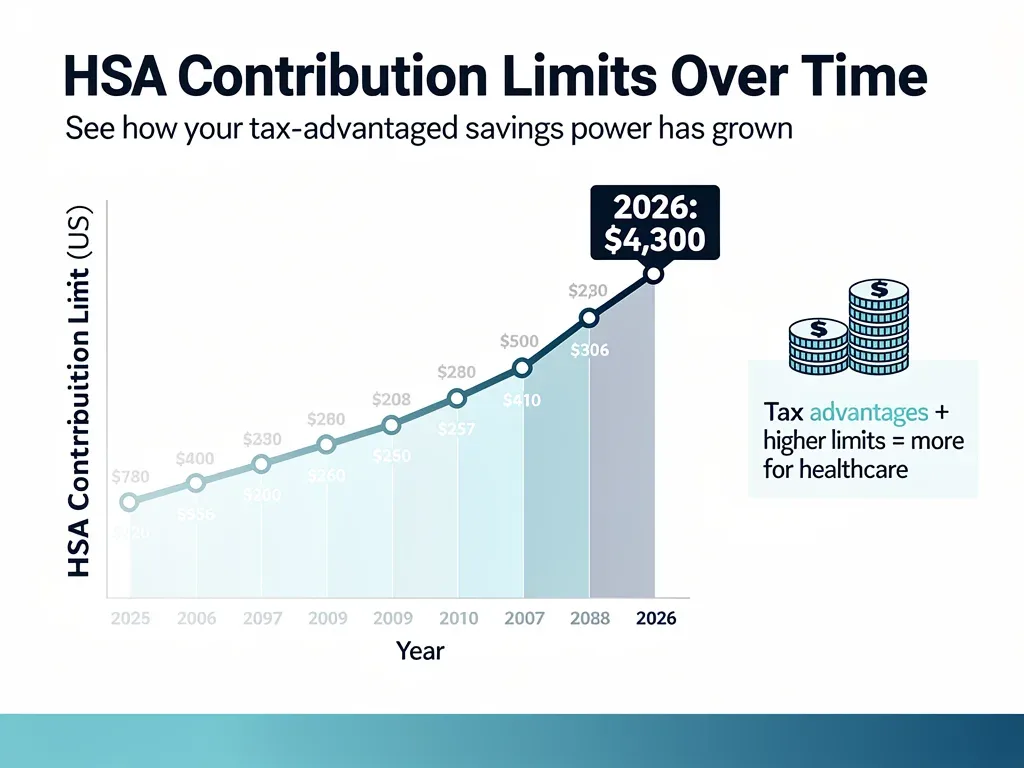
The 2026 HSA contribution limit of $4,300 for self-only coverage represents a consistent upward trend in HSA limits. Comparing this to previous years highlights the increasing recognition of HSAs as a vital financial tool.
This steady increase reflects adjustments for inflation and the rising cost of healthcare services, ensuring that HSAs remain relevant and beneficial. Each year's increase provides a new opportunity for greater savings.
Understanding this historical context helps both employers and employees appreciate the long-term value and stability of the HSA program. The 2026 HSA contribution limit continues this positive trajectory.
The Role of HSAs in Retirement Planning
HSAs are increasingly recognized as a powerful, tax-advantaged vehicle for retirement planning, especially for healthcare costs in later life. The new 2026 HSA contribution limit further strengthens this role by allowing greater accumulation of funds.
Unlike 401(k)s or IRAs, HSA withdrawals for qualified medical expenses are always tax-free, even in retirement. This unique feature makes them an excellent complement to traditional retirement accounts.
As individuals approach retirement, the accumulated funds in their HSA, boosted by consistent contributions up to the 2026 HSA contribution limit, can cover significant out-of-pocket medical expenses. This provides a crucial layer of financial security.
Employer Communications and Education
Effective communication from employers is paramount to ensure employees understand and utilize the new 2026 HSA contribution limit. Clear, concise, and accessible information can drive higher participation rates.
Employers should provide educational materials that explain the benefits, eligibility requirements, and investment options associated with HSAs. This empowers employees to make informed decisions about their healthcare savings.
Regular updates and reminders about the 2026 HSA contribution limit and its advantages can keep HSAs top of mind for employees. This ongoing education fosters a culture of financial wellness within the organization.
Future Outlook and Potential Adjustments
While the 2026 HSA contribution limit is set, future adjustments are always possible, typically influenced by inflation and healthcare cost trends. Staying informed about potential changes is crucial for ongoing financial planning.
Policymakers continue to evaluate the role of HSAs in the broader healthcare landscape, and legislative changes could impact their structure or limits. Employers and individuals should remain vigilant for any new developments.
However, the consistent growth in HSA limits, including the 2026 HSA contribution limit, signals a strong commitment to these accounts as a key component of health and retirement savings strategies. This provides a degree of stability for long-term planning.
Key Aspect | Description |
|---|---|
New Limit | $4,300 for self-only coverage for 2026. |
Employer Impact | Opportunity to enhance benefit packages and attract talent. |
Employee Benefit | Increased tax-free savings for healthcare and retirement. |
Strategic Planning | Essential for maximizing HSA advantages and financial wellness. |
Frequently Asked Questions About the 2026 HSA Contribution Limit
What is the new 2026 HSA contribution limit for self-only coverage?▼
The new 2026 HSA contribution limit for individuals with self-only coverage is set at $4,300. This represents an increase from previous years, allowing individuals to save more tax-free for qualified medical expenses and future healthcare costs.
How does the increased 2026 HSA contribution limit affect employers?▼
Employers can leverage the higher 2026 HSA contribution limit to enhance their health benefit packages, making HDHPs more attractive. This can improve employee recruitment and retention, and foster greater financial wellness among their workforce.
What are the tax advantages of an HSA with the new limit?▼
HSAs offer a triple tax advantage: contributions are tax-deductible, earnings grow tax-free, and qualified withdrawals are tax-free. The increased 2026 HSA contribution limit amplifies these benefits, allowing for greater tax-advantaged savings.
Can HSAs be used for retirement planning, especially with the new 2026 HSA contribution limit?▼
Yes, HSAs are an excellent tool for retirement planning. Funds saved up to the 2026 HSA contribution limit can be invested and grow tax-free, providing a dedicated resource for healthcare expenses in retirement, a significant financial concern for many.
What steps should employees take to maximize their HSA contributions?▼
Employees should aim to contribute the maximum amount up to the 2026 HSA contribution limit, if financially feasible. They should also explore investment options within their HSA and consider paying current medical expenses out-of-pocket to allow funds to grow.
Looking Ahead
The announcement of the 2026 HSA contribution limit at $4,300 signals a continued commitment to empowering individuals and employers in managing healthcare costs.
This adjustment reinforces the strategic importance of Health Savings Accounts in personal and corporate financial planning.
Businesses should proactively review their benefit offerings, while individuals are encouraged to maximize their contributions to harness the full potential of these tax-advantaged savings vehicles.
Staying informed about evolving regulations and market trends will be critical for effectively Navigating the New 2026 HSA Contribution Limit.